Severe weather does not wait for a convenient break in the schedule. For commercial and industrial contractors across Middle and East Tennessee, construction lightning safety is one part of a larger extreme-weather management problem that can interrupt work, damage materials, and put crews at risk in minutes. This Tennessee playbook keeps the approved subject central: how contractors can manage extreme weather risk on active construction sites through better planning, clearer thresholds, and more disciplined field decisions.
That approach is consistent with Construction Executive coverage on managing extreme weather risks on construction sites: effective weather management depends on planning around actual project conditions, activity-specific thresholds, and leadership follow-through rather than last-minute reactions. For Tennessee contractors, that means building one operational process that covers lightning, heavy rain, flooding, heat, wind, and restart decisions across projects in Nashville, Knoxville, Chattanooga, the Tri-Cities, and along the I-40, I-75, and I-24 corridors.
Key Takeaways
- Treat severe weather as a project-control issue, not just a forecast issue. Construction leaders need defined stop-work triggers, shelter plans, restart inspections, and documentation before storms develop.
- Construction lightning safety should be built into the site’s broader severe-weather procedures. Outdoor crews need a clear rule for when to stop, where to shelter, and who gives the all-clear.
- One weather briefing should cover lightning, heat, heavy rain, and flooding together. Tennessee’s warm-season weather often stacks these hazards into the same afternoon window.
- Activity-specific decisions matter. Crane work, scaffolding, steel erection, roofing, excavation, and temporary power all need weather thresholds that fit the task.
- Documentation protects both people and projects. Record weather alerts, shutdown times, inspections, and restart decisions as part of normal site management.
Why Extreme Weather Requires a Construction Plan, Not Just a Weather App
Checking a phone radar app is useful. It is not the same as managing severe weather risk on a jobsite.
Construction Executive’s broader severe-weather coverage has stressed that contractors should look beyond the daily forecast and consider site history, regional conditions, and the specific activities underway. That is the right frame for Tennessee projects. A downtown tower, a hospital expansion, a school addition, and a corridor job along I-40 do not face weather risk in the same way, even when the forecast is identical.
A documented weather procedure helps project teams answer practical questions before the sky turns dark:
- Who is monitoring radar, alerts, and changing site conditions during the shift?
- What conditions trigger a pause for outdoor work, crane activity, work at height, or excavation access?
- Where do crews go if lightning threatens?
- How will subcontractors receive the same instruction at the same time?
- What must be inspected before work restarts?
That is the core subject here: managing extreme weather risk on construction sites through planning and decision discipline, with construction lightning safety as a critical part of the system rather than a standalone seasonal reminder.
How Extreme Weather Shows Up on Tennessee Jobsites
Middle and East Tennessee contractors deal with several weather exposures that often overlap:
- Lightning and thunderstorms: A direct threat to workers in open areas, on upper decks, on scaffolds, in lifts, or around cranes and steel.
- Heavy rain: A fast-moving threat to excavations, slopes, temporary access roads, and partially dried or uncovered work.
- Flooding and runoff: A major issue on sites with trenches, low points, unfinished drainage, or corridor access constraints.
- Heat and humidity: A workforce risk that builds before the same afternoon storms that create lightning exposure.
- Wind: A stability and material-control issue for cranes, sheeting, lifts, formwork, staging, and rooftop activity.
That combination is why a broad severe-weather plan matters more than a narrow one. A superintendent may pause for lightning, then face heat recovery issues when crews restart, then discover a flooded excavation or damaged temporary power setup after the storm passes.
Construction Lightning Safety as One Part of Extreme-Weather Management
Among these hazards, construction lightning safety deserves special attention because construction sites are so exposed. Open decks, rebar, steel framing, scaffolding, cranes, lifts, and unfinished structures offer little protection during a thunderstorm. OSHA’s outdoor lightning safety guidance and National Weather Service materials both support a simple principle: if thunder can be heard, workers should move to safer shelter.
For contractors, the important point is operational. Don’t manage lightning through improvisation. Handle it through preplanned decisions tied to weather monitoring, work-at-height controls, shelter identification, and crew accountability.
Core lightning practices that are well supported include:
- If you hear thunder, suspend exposed outdoor activities and move crews to safe shelter.
- Use substantial buildings or hard-topped metal vehicles with the windows up as preferred shelter options.
- Avoid trees, small open structures, scaffold canopies, and partially enclosed areas that do not provide real protection.
- Keep workers away from conductive systems, temporary electrical setups, and elevated positions during active storms.
- Wait to resume exposed outdoor work until the storm has clearly moved on; the National Weather Service commonly advises waiting 30 minutes after the last thunder.
Those are practical controls, not a substitute for a company’s broader emergency procedures. On a large Tennessee jobsite, they work best when folded into the same severe-weather process used for heat, flooding, and restart inspections.
What OSHA, NOAA, and Tennessee Resources Actually Support
Several parts of the original draft needed tighter wording. The safest supported position is this: employers should treat lightning and severe weather as recognized outdoor hazards and build response steps into their site safety and emergency procedures.
OSHA’s lightning safety materials for outdoor work direct employers and workers to National Oceanic and Atmospheric Administration resources for lightning data, educational materials, and safety messaging. The National Weather Service provides the widely used shelter and response guidance that many contractors build into field procedures.
For heat, OSHA says employers should assess both environmental heat and the metabolic heat generated by physical work. OSHA also cautions employers not to rely on the heat index alone when a more accurate worksite tool, such as wet-bulb globe temperature, is available. Its prevention guidance supports daily assessment, extra precautions for new workers, supervisor training, and access to rest, shade, and fluids.
In Tennessee, TOSHA training services help employers and employees reduce workplace hazards and comply with Tennessee OSHA requirements. TEMA also identifies extreme temperatures as a statewide risk that can affect workers, transportation, and operations. ABC Greater Tennessee can help members connect those resources to practical site leadership through its education and safety training programs.
When to Stop Work: Practical Weather Triggers for Site Leaders
One of the most useful lessons from Construction Executive’s severe-weather coverage is that weather planning should be tied to specific activities, not just general awareness. The right question is not only, “Is bad weather coming?” It is, “What work is underway, and what threshold should stop it?”
Examples of practical trigger points include:
- Lightning: Thunder heard, visible lightning, or a company-defined lightning alert radius based on its monitoring tools.
- Crane and lifting operations: Approaching storms, unsafe wind conditions, or site/manufacturer criteria that make continued lifting unsafe.
- Scaffolding and work at height: Lightning, high winds, slick surfaces, or visibility conditions that increase fall exposure.
- Excavation and trench access: Heavy rain, runoff, standing water, or erosion that can affect stability and safe entry.
- Concrete, roofing, and exposed finish work: Rain timing, wind, temperature, and schedule impacts that can damage work in place.
Different contractors may set somewhat different thresholds, but the key is consistency. The superintendent, project manager, safety lead, and subcontractors should know in advance which tasks stop first, who makes the call, and how that instruction is communicated.
Where Crews Should Go During a Lightning Threat
Shelter planning is one of the most practical parts of construction lightning safety. Crews should not have to debate where to go once thunder starts.
Preferred shelter options generally include:
- Substantial enclosed buildings
- Hard-topped metal vehicles with windows up
Locations that should not be treated as reliable lightning shelter include:
- Open-sided structures
- Scaffolds or scaffold canopies
- Trees
- Partially enclosed framing
- Storage areas or improvised covers that do not provide full protection
On large or complex Tennessee projects, map shelter plans during mobilization. Corridor jobs may need designated vehicle staging because crews can be spread across long work zones. Dense urban sites may need coordination with adjacent occupied buildings or carefully planned descent and travel routes for workers on upper floors or tower cranes.
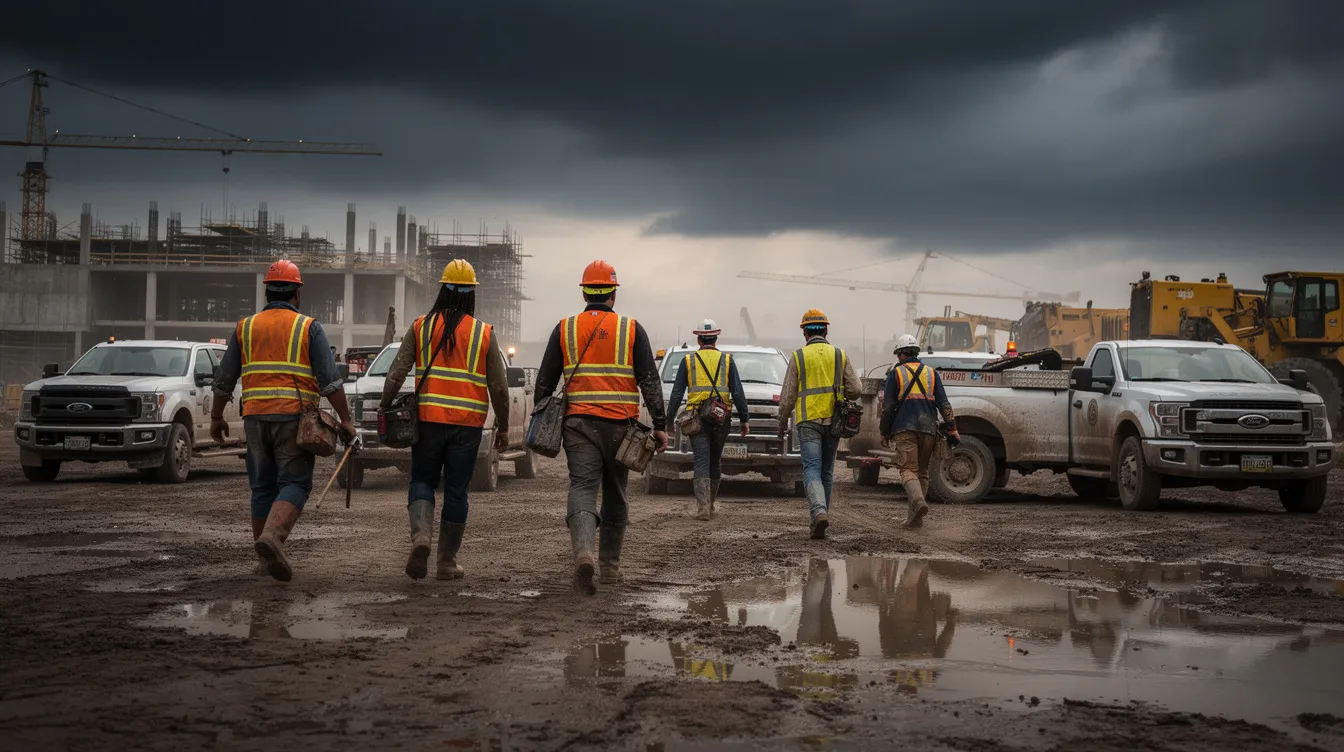
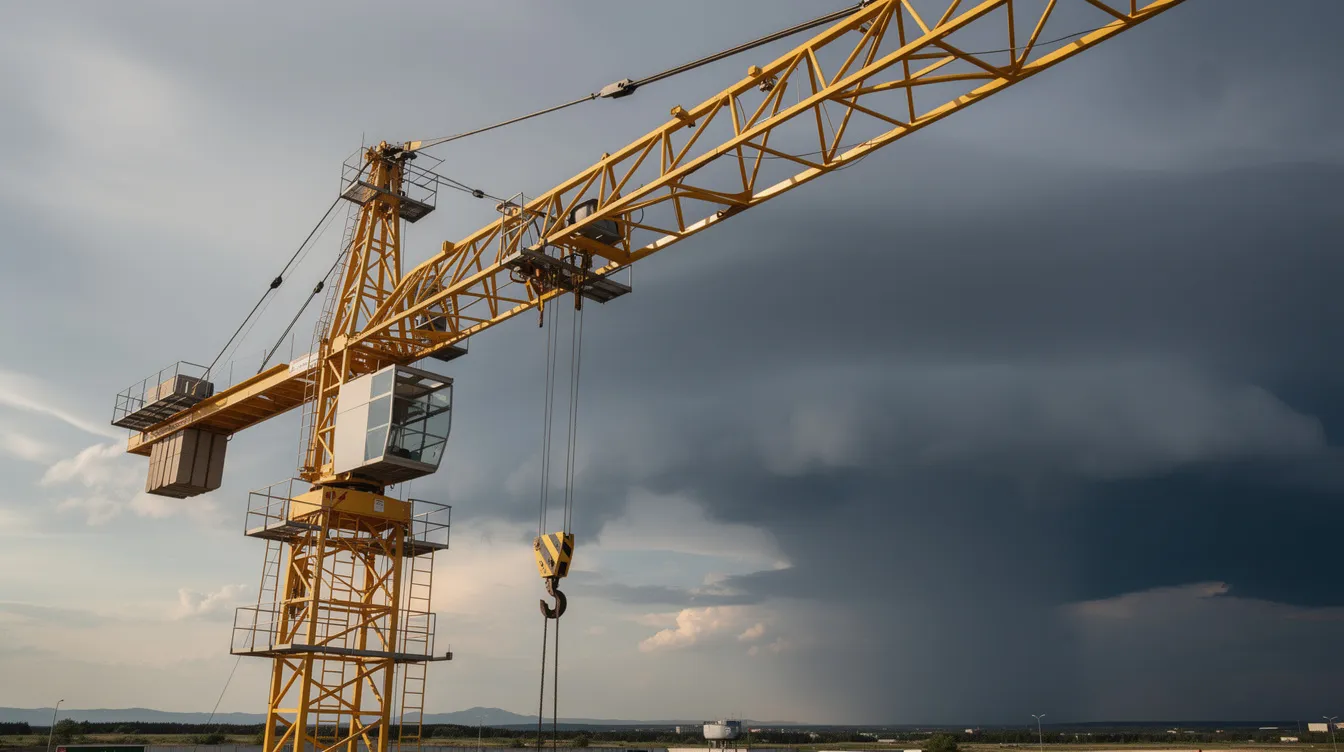
Managing Cranes, Scaffolds, and Equipment Before a Storm Hits
Equipment planning is another place where severe-weather management becomes more than a forecast check. Cranes, lifts, scaffold systems, temporary structures, and loose materials all need task-specific storm procedures.
Before severe weather reaches the site, contractors should be ready to:
- Suspend exposed lifting operations under the project’s severe-weather procedure and applicable manufacturer guidance
- Lower or secure loads and place equipment in the recommended out-of-service condition as appropriate
- Get workers down from tower cranes, scaffolds, roofs, and lifts with enough lead time to reach shelter safely
- Secure or stow loose materials that could shift in wind or heavy rain
- Protect temporary power and vulnerable materials from water intrusion where feasible
After the storm, a qualified person should inspect critical equipment and affected work areas before operations resume. That inspection may include scaffold condition, crane status, ground conditions, access routes, temporary electrical systems, roof areas, and excavations.
Heat, Humidity, and Storms Often Arrive Together
Tennessee contractors should not plan heat and storms separately. The same weather pattern that builds heat stress through the late morning and early afternoon can also produce thunderstorms later in the day.
OSHA’s heat guidance supports several controls that fit naturally inside an extreme-weather procedure:
- Assess heat conditions daily
- Use added precautions for new or returning workers
- Provide water, rest, and shade
- Train supervisors to recognize heat illness warning signs
- Schedule heavier tasks earlier when possible
That is why one severe-weather briefing often works better than separate seasonal reminders. If the afternoon forecast suggests high heat followed by thunderstorms, leaders may need to adjust work sequencing, accelerate certain tasks, or reduce exposure windows before either hazard peaks.
For a deeper look at this related topic, contractors can also review ABC Greater Tennessee’s heat illness prevention guidance.
Heavy Rain, Flooding, and Restart Inspections
Not every severe-weather decision is about the moment the storm arrives. Some of the biggest risks show up after the rain.
Heavy rain can quickly affect:
- Excavation and trench stability
- Slope integrity
- Access roads and delivery routes
- Stored materials
- Temporary electrical systems
- Housekeeping and slip hazards across the site
For Tennessee corridor and infrastructure projects, runoff and access disruption can also affect traffic control, emergency access, and material delivery. ABC Greater Tennessee’s corridor work-zone risk planning guide offers related planning ideas for projects where weather and traffic exposure overlap.
A practical restart inspection after severe weather may include:
- Excavations, trench protection, and dewatering status
- Scaffolds, ladders, guardrails, and access systems
- Crane areas, lift paths, and soft ground conditions
- Temporary power, cords, panels, and exposed connections
- Roof surfaces, openings, and water accumulation
- Debris, washout, and blocked access routes
A Tennessee Severe-Weather Decision Checklist
To preserve the source subject while adding practical value, use this quick field checklist before and during severe-weather season.
| Decision Area | Questions to Answer |
|---|---|
| Daily forecast review | Who is checking radar, alerts, heat conditions, and storm timing before work starts? |
| Task exposure | Which activities today are most weather-sensitive: crane work, roofing, steel, excavation, temporary power, or concrete? |
| Stop-work authority | Who has authority to pause work, and do all subcontractors know that? |
| Lightning shelter | Where do crews go if they hear thunder, and is there enough shelter capacity? |
| Equipment protection | What must be secured first if wind, rain, or lightning approaches? |
| Heat controls | Do water, rest, shade, and supervision match today’s heat conditions? |
| Restart inspection | Who inspects excavations, scaffolds, access routes, and temporary power before restart? |
| Documentation | How will shutdown timing, inspections, and restart decisions be recorded? |
This is the kind of practical decision tool that helps site leaders apply the broader severe-weather risk-management theme to real projects in Tennessee.
Regional Considerations Across Middle and East Tennessee
Regional relevance matters, but it should stay tied to the approved subject. Severe-weather management looks different depending on project type and geography.
Nashville, Knoxville, and Chattanooga urban sites may face limited shelter options, tower crane coordination, rooftop exposure, and tighter restart logistics because crews and materials are stacked vertically.
Tri-Cities and East Tennessee terrain can create more variable runoff, slope, and access issues, especially where elevation and drainage conditions shift across a site.
Interstate and corridor projects along I-40, I-75, and I-24 may spread crews over long distances, which makes centralized weather monitoring, radio communication, and shelter/vehicle planning more important.
Healthcare, campus, and occupied-facility work may require more coordination on shelter access, shutdown communication, and site movement when weather interrupts work.
These are not reasons to create separate weather systems for each project. They are reasons to adapt one clear severe-weather framework to the actual site.
Documentation and Restart Discipline Matter
Document weather decisions the same way you document other major safety and operational decisions. Good records help teams explain why work paused, what was inspected, and why restart was appropriate.
Useful records often include:
- Forecasts, alerts, or radar conditions that triggered action
- The time work was paused
- Who communicated the shutdown
- Where crews sheltered
- Inspection notes and photos after the storm
- The time and basis for restart
That discipline improves more than compliance posture. It also supports scheduling conversations, owner communication, and internal learning after close calls or repeated disruptions.
How ABC Greater Tennessee Can Help
ABC Greater Tennessee serves merit shop contractors across Middle and East Tennessee with practical education, safety support, and workforce development. For members looking to strengthen severe-weather readiness, the most relevant next step is usually supervisor and field-leader training that turns general weather awareness into a repeatable site process.
Contractors can connect this topic to ABC Greater Tennessee’s broader construction safety management field playbook, which helps companies build consistent systems around planning, communication, and leading indicators. Teams that want to sharpen site leadership can also explore the chapter’s training and education resources for supervisors, safety managers, and craft professionals.
If your current severe-weather procedure depends too heavily on last-minute judgment, this is a good time to tighten it. Review who monitors weather, who can stop work, how crews shelter during lightning threats, what gets inspected after heavy rain, and how restart decisions are documented. That one review can make the next storm less chaotic and more manageable.

Frequently Asked Questions About Construction Lightning Safety and Severe-Weather Planning
Below are answers to common questions about this topic.
How often should a Tennessee contractor review severe-weather procedures with crews?
At minimum, review them at project startup, during new-worker orientation, and before the main thunderstorm season. During warmer months, brief refreshers in toolbox talks help keep stop-work triggers, shelter locations, and restart expectations clear.
What if our site has no permanent building nearby for lightning shelter?
Plan that before work begins. Hard-topped metal vehicles with the windows up are commonly used as a secondary shelter option when substantial buildings are not available. The key is to confirm capacity, travel time, and accountability in advance.
Can a weather app replace a written severe-weather procedure?
No. Monitoring tools support decisions, but they do not define authority, shelter routes, stop-work triggers, restart inspections, or subcontractor coordination. Those decisions belong in the company’s site procedures.
Should all subcontractors follow the same weather thresholds?
On a shared site, the controlling contractor should establish one clear weather-management process so trades don’t make conflicting stop-work decisions during the same event. Some task-specific controls may vary, but the sitewide communication and shelter process should be unified.
What should supervisors do if a worker is struck by lightning?
Call emergency services immediately and follow your company’s emergency response procedures. If trained personnel are available, follow current first-aid and CPR training and site emergency protocols while waiting for medical help to arrive.