
Construction wearables have moved from novelty to practical jobsite tool. On October 5, 2026, Associated Builders and Contractors released its sixth annual health and safety technology report, highlighting how contractors are using technology, data, and collaboration to address safety challenges and improve workforce performance. For contractors across Middle and East Tennessee, the immediate question is how to evaluate construction wearables in a disciplined way that supports existing safety programs rather than distracting from them.
Key Takeaways
- ABC’s October 5, 2026 health and safety technology report highlights wearables, AI-powered risk detection, fatigue and hydration management, environmental monitoring, and connected jobsite solutions as part of a proactive safety approach.
- Construction wearables can enable faster alerts, better hazard visibility, and stronger documentation when matched to specific risks such as heat, struck-by exposure, or confined-space conditions.
- Tennessee contractors should evaluate wearables by hazard cluster, worker acceptance, data policy, and workflow fit, rather than adopting technology for its own sake.
- A focused 60- to 90-day pilot on one representative project is often the safest way to test whether wearable technology improves field response and safety decision-making.
- ABC Greater Tennessee’s Safety Programs and STEP-oriented resources can help members connect new tools to training, safety culture, and continuous improvement.
What ABC’s New Safety-Tech Report Means for Tennessee Contractors
ABC’s October 5, 2026 news release says its sixth annual health and safety technology report spotlights how contractors are leveraging technology, data, and collaboration to address health and safety challenges while improving workforce performance and operational excellence. ABC’s health and safety technology materials also frame the conversation around wearable technologies, AI-powered risk detection, mental health initiatives, fatigue and hydration management, environmental monitoring, and connected jobsite solutions.
That matters because wearables are easiest to misunderstand when they are treated as gadgets. In practice, their value is operational. A wearable may warn a worker about nearby equipment, flag environmental stress before conditions worsen, or give supervisors better information for real-time response and later review.
For Tennessee contractors, the useful takeaway is not that every project now needs body-worn technology. It is that wearable tools deserve a structured evaluation wherever crews face repeated exposure to heat, heavy equipment interaction, limited visibility, or other hazards that benefit from faster warnings and better situational awareness.
Construction Wearables 101: What They Are and How They Work
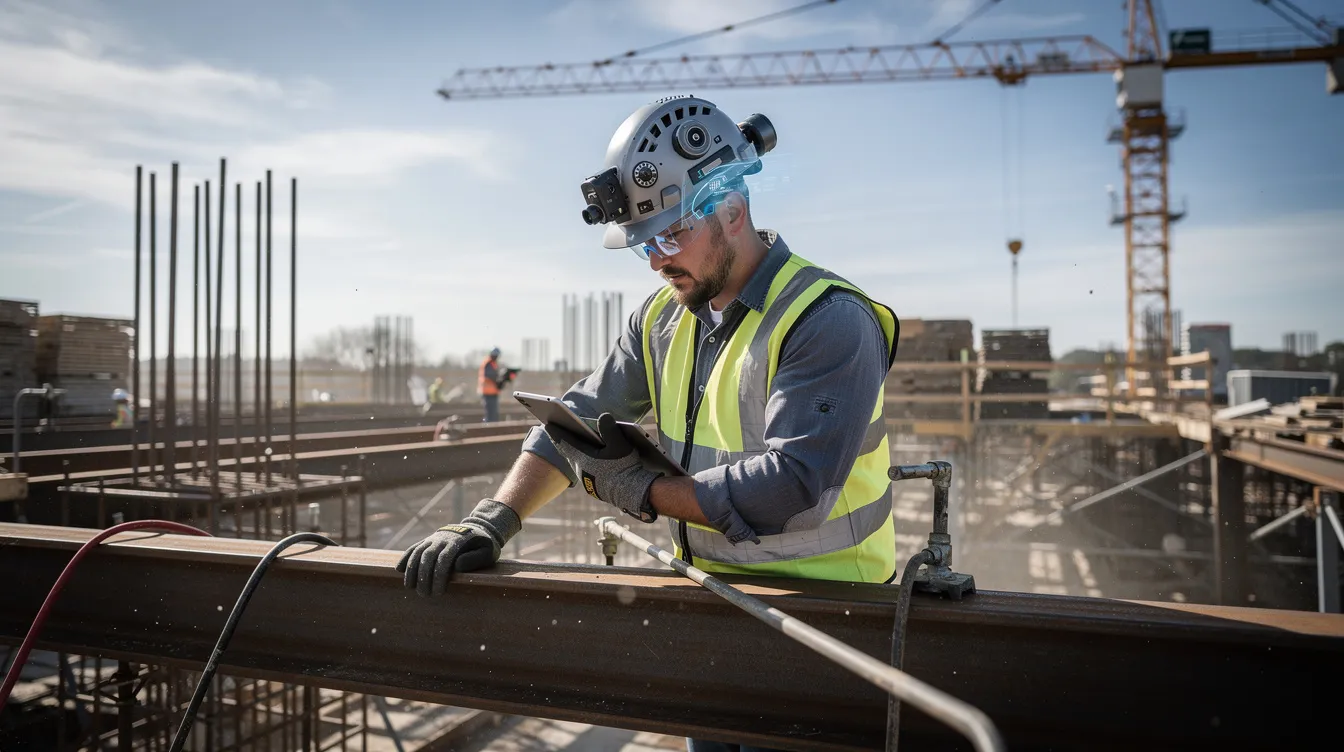
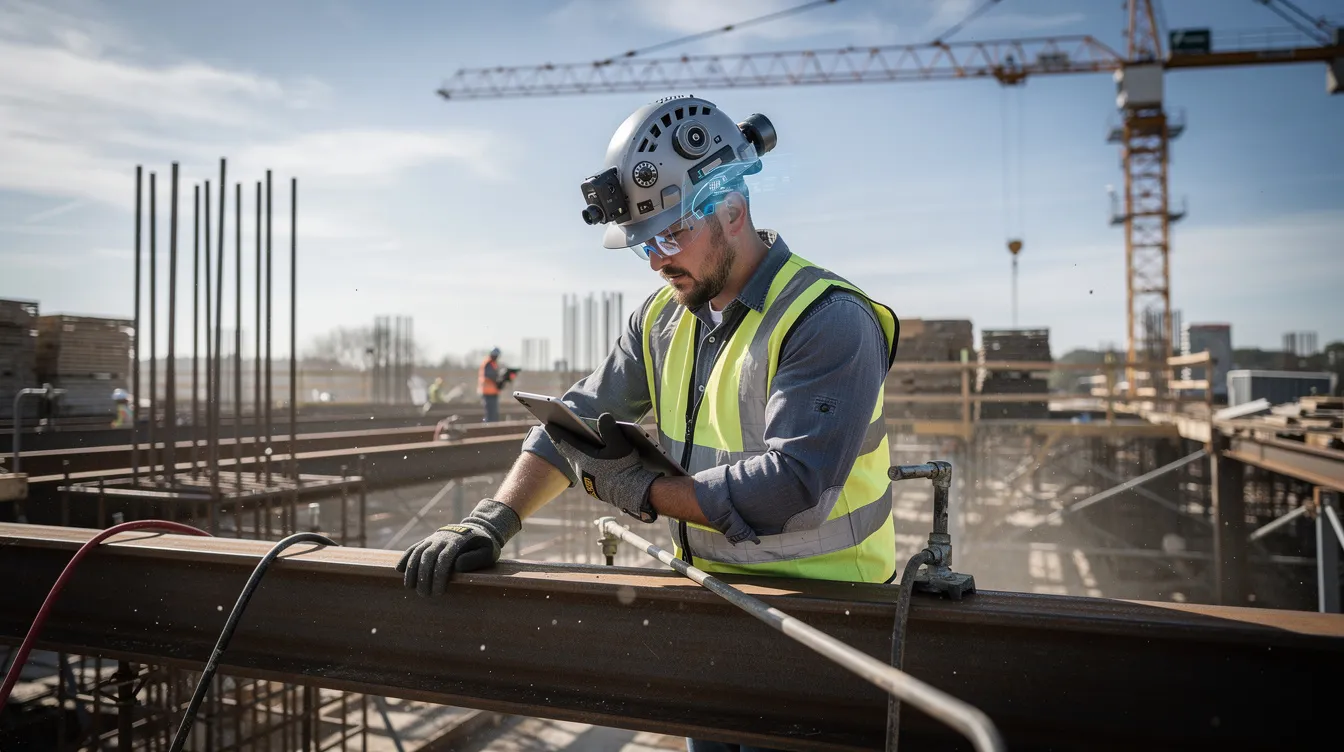
Construction wearables are body-worn or PPE-integrated devices that collect safety-related data and deliver alerts in the field. Common formats include badges, wrist-worn monitors, helmets, vests, eyewear, and sensor-equipped clothing.
NIOSH describes construction wearables as a growing category that can include proximity detection and alert systems, physiological status monitors that can warn about potential heat stress, environmental sensors, and exoskeletons that may reduce mechanical stress from manual labor. NIOSH also notes that wearables on worksites are often connected through wireless or Internet of Things infrastructure that supports messaging, alarms, location monitoring, and analytics.
The core components typically include:
- Sensors that detect movement, temperature, location, or selected physiological indicators
- Connectivity to a phone, gateway, or site network
- Alerts delivered to the worker, supervisor, or both
- A dashboard or reporting layer that helps teams review trends and incidents
The most useful distinction for decision-makers is simple: some wearables trigger immediate alerts, some improve supervisor visibility, and some mainly support later analysis. The strongest safety programs usually understand a device’s role before deployment starts.
Where Construction Wearables Fit on Tennessee Jobsites
Not every project needs the same technology mix. The better approach is to start with the hazard, then decide whether a wearable meaningfully improves protection, response time, or documentation.
Examples of Tennessee-relevant use cases include:
- High-rise and dense urban work: On congested sites, proximity alerts may help reduce struck-by exposure around cranes, forklifts, or other mobile equipment.
- Large industrial or logistics projects: Wearables with location or alert capability may improve visibility where crews and equipment are spread across a broad footprint.
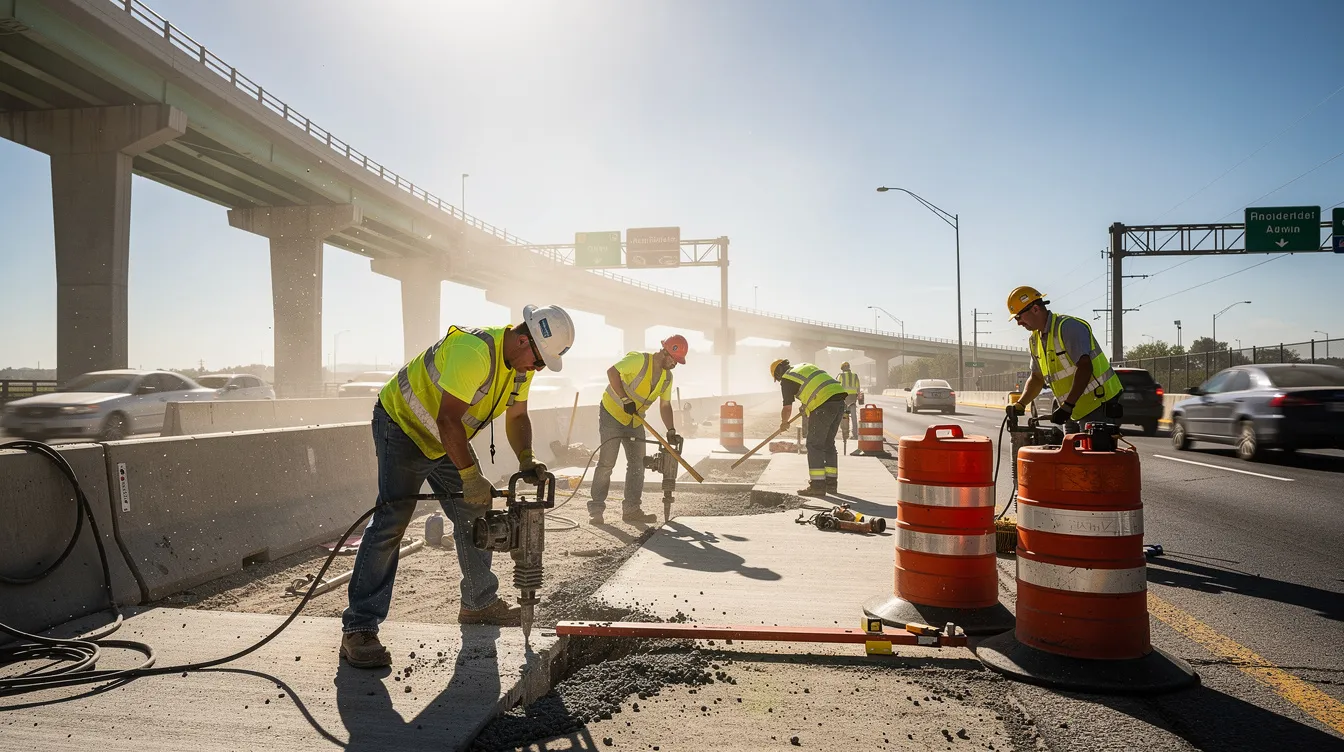
- Road, bridge, and other outdoor work: Heat and exertion monitoring may be worth evaluating during hot-weather operations or long-shift field work.
- Interior build-outs or low-visibility environments: Environmental or location-aware devices may be relevant where ventilation, access, or line of sight is limited.
This is why adoption should be hazard-led. If your highest exposures are falls, struck-by risk, heat, or confined-space conditions, evaluate the wearable category that speaks directly to that problem. If the technology does not improve a real control decision, it is probably not the right first pilot.
Types of Construction Wearables Contractors Should Know
Proximity detection wearables. These devices alert workers or operators when people and equipment move too close. NIOSH specifically notes proximity detection and alert systems as a construction wearable application that can warn workers about moving hazards such as heavy equipment.
Heat and physiological monitors. Physiological status monitors may help identify patterns associated with overexertion or heat stress risk. Treat these tools as safety-support devices, not medical diagnostic devices.
Environmental sensor wearables. Wearables can monitor conditions such as temperature, humidity, air quality, gas exposure, or noise where the work environment changes quickly or traditional fixed monitoring is impractical.
Smart helmets and connected PPE. Some helmet, vest, or clothing systems combine alerts, location awareness, communications, or environmental sensing inside equipment workers already wear.
Exoskeletons. NIOSH identifies exoskeletons as a wearable category that can reduce the mechanical stress of manual labor and may help address physical strain in selected tasks.
Location-aware badges or tags. These can support worker location visibility, emergency response, or restricted-area alerts on larger or more complex job sites.
Not every product in these categories offers the same capability, durability, or workflow value. That is one reason a limited pilot usually tells you more than a feature list.

From Proactive Safety to Total Human Health
One useful element of ABC’s current framing is that it places wearables inside a broader proactive-safety conversation rather than treating them as standalone gear. ABC’s health and safety technology materials pair wearables with fatigue and hydration management, mental health initiatives, environmental monitoring, and connected jobsite solutions.
That broader view matters. Some wearable tools may help supervisors identify when conditions are changing, when rest cycles may need review, or when environmental factors deserve faster intervention. But these systems work best when they reinforce a larger safety culture that already values planning, communication, and worker well-being.
They also have limits. Wearables can support field awareness, but they do not replace training, competent supervision, required PPE, or site-specific hazard controls. And when a device involves physiological monitoring, contractors should handle data, alerts, and follow-up with clear policies and appropriate privacy safeguards.
A Practical Evaluation Framework Before You Buy
Before committing budget, Tennessee contractors should pressure-test construction wearables against a few basic questions:
- What hazard are we trying to reduce? Match the device to a defined problem such as heat stress exposure, equipment interaction, environmental conditions, or emergency-response visibility.
- Will workers actually wear it? Comfort, durability, battery life, and interference with normal work matter as much as the feature sheet.
- What data are collected, and who can access them? Establish written rules for collection, access, retention, and use before rollout.
- Does it fit our existing safety workflow? The best tools reinforce pre-task planning, field communication, supervision, and incident review rather than creating a disconnected side system.
- Are we buying alerts, analytics, or both? Some tools are strongest in the moment. Others matter more after the shift when teams review trends and recurring exposure.
- What is the true operating cost? Evaluate hardware, subscriptions, replacements, training, and any supporting network needs.
Evaluate wearables as one layer in a broader safety management approach, not as a shortcut around it.
How to Launch a Low-Risk Wearables Pilot
A full rollout on day one is rarely necessary. A more practical path is a controlled 60- to 90-day pilot on one representative project or one clearly defined hazard exposure.
- Choose one use case. Start with a high-value problem such as heat stress monitoring for outdoor crews or proximity alerts around heavy equipment.
- Select one project or crew. Use a site where the exposure is real enough to evaluate, but not so unusual that the results are hard to apply elsewhere.
- Define success in advance. That may include alert usefulness, worker acceptance, response speed, supervisor visibility, or better documentation of recurring conditions.
- Explain the pilot clearly. Workers should know what data are being collected, why the pilot is happening, and how privacy will be handled.
- Track a small set of observations. Monitor field usability, alert frequency, false alarms, worker feedback, and whether the device improves actual decision-making.
- Decide whether to scale, adjust, or stop. A pilot succeeds when it produces an honest operating decision, not when it forces a companywide rollout.
This kind of disciplined test keeps the pilot focused on solving one defined safety problem on an actual jobsite.
Privacy, Trust, and Change Management
Wearables can raise legitimate concerns about privacy, data use, and worker trust. NIOSH notes that cost, maintenance, and privacy can affect adoption, and it also points out that some workers may worry that wearables could be used to track location, hours, breaks, or productivity rather than support safety.
That makes policy and communication essential. Contractors should establish clear written limits on what is collected, who can see it, how long it is retained, and how it will and will not be used. Field leaders should be involved early, so the technology is understood as a safety tool, not a surveillance project.
For devices that capture health-related information, it is also wise to review policies with legal and HR advisors before broader deployment.
Connecting Wearables to ABC Greater Tennessee Resources
Wearables work best inside a mature safety program. That is where ABC Greater Tennessee’s Safety Programs become relevant for member contractors evaluating new tools. STEP participation, OSHA training, safety discussions, and broader worker well-being initiatives can give companies a stronger framework for deciding whether a wearable pilot belongs in their operations.
Members interested in the broader technology context can also review ABC Greater Tennessee’s related resources on digital safety tools for construction and construction safety technology. This article, however, stays narrower: whether construction wearables have a defined role on your job sites and how to test that responsibly.
If your company is considering a wearables pilot, ABC Greater Tennessee can help you connect that conversation to safety training, STEP participation, and practical peer learning.
Conclusion: A Better First Step for Construction Wearables
ABC’s new health and safety technology report is a useful prompt for Tennessee contractors because it keeps the focus on proactive protection, not technology hype. Construction wearables may improve alerts, visibility, and response on some job sites, especially when matched to specific exposures such as heat, equipment interaction, or changing environmental conditions.
The best first move is not a sweeping purchase. It is a disciplined pilot tied to one real hazard, one crew, and one clear decision. If the tool helps your team respond faster, see more clearly, and support workers without adding unnecessary friction, then you have something worth scaling. If not, you have still learned something valuable before spending more.
For Middle and East Tennessee contractors, that is the practical path forward: keep wearables connected to actual safety performance, worker trust, and the systems you already use to build safer job sites.
Frequently Asked Questions About Construction Wearables
Below are answers to common questions about this topic.
How are construction wearables different from consumer fitness trackers?
Construction wearables are designed for worksite safety use cases such as proximity alerts, environmental sensing, and selected physiological monitoring in active field conditions. They are evaluated for jobsite function, not general wellness tracking.
Do construction wearables replace OSHA requirements or traditional PPE?
No. Wearables can add another layer of awareness or documentation, but they do not replace required PPE, supervision, training, or compliance obligations.
What is the best first wearable pilot for many contractors?
That depends on your work’s exposure profile. For some firms, the best starting point may be heat and exertion monitoring on outdoor crews. For others, it may be proximity alerts around mobile equipment or location visibility on larger sites.
Can wearables help with emergency response?
They can, particularly when a device improves worker location visibility or sends alerts after a defined event. But those capabilities should be integrated into broader site-specific emergency planning rather than relied on in isolation.
How should smaller Tennessee contractors get started?
Start with one clearly defined hazard, one limited pilot, and one set of written expectations around data, workflow, and worker communication. If you need a framework, begin with ABC Greater Tennessee’s safety resources and build from there.