

Key Takeaways
- Tennessee’s labor market remains tight, with the state unemployment rate at 3.4% in August 2026 and construction employment at 166,200 in June 2026. For contractors, that makes a construction workforce pipeline a more practical long-term strategy than reactive hiring.
- A true construction workforce pipeline includes awareness, recruiting, screening, onboarding, registered apprenticeship, and retention. Each stage should feed the next.
- Registered apprenticeship through ABC Greater Tennessee’s Construction Trades Academy in Nashville and Knoxville can anchor a more predictable talent strategy for commercial contractors.
- Entry points such as regional dual-enrollment training, START Center Knoxville training, veteran pathways, and career-changer recruiting can widen the top of the funnel.
- Because the 2026-2027 application deadline has already passed, contractors should check the current apprenticeship application page for the next reopening and align internal recruiting calendars with the next intake cycle.
Why Tennessee Contractors Need a Construction Workforce Pipeline
Tennessee contractors do not need much reminding that skilled labor is hard to find. The state’s unemployment rate was 3.4% in August 2026, and Tennessee construction employment stood at 166,200 in June 2026. In practical terms, that is a tight labor market with limited slack for commercial contractors across Nashville, Knoxville, Chattanooga, and the Tri-Cities.
That pressure changes how companies should think about hiring. When the market is tight, posting an opening after a project ramps up often means competing for people who are already employed, already committed, or not trained for the work you need done. A better approach is to build a repeatable system to bring new people into the trades, develop them over time, and keep them on your team.
That is what a construction workforce pipeline is: not a one-time recruiting push, but a long-term operating strategy. For Middle and East Tennessee contractors, pipeline planning belongs in the same conversation as backlog, safety, supervision, and project delivery.

What a Construction Workforce Pipeline Really Means
A construction workforce pipeline is the steady movement of people from first exposure to construction into productive field roles and, eventually, into leadership. It is not just recruiting. It is the full path from awareness to advancement.
For most contractors, the core stages look like this:
- Awareness: Students, veterans, career changers, and families see construction as a real career path.
- Recruiting and screening: The company identifies people with the attitude, reliability, and baseline qualifications to enter the field.
- Onboarding and early job training: New hires learn expectations, safety basics, and how the company operates.
- Registered apprenticeship: Workers develop trade skills through structured classroom instruction and on-the-job learning.
- Retention and advancement: Apprentices grow into experienced craft professionals, crew leads, and future foremen.
The point is continuity. If a company only acts when a foreman asks for more help, it is always behind. A pipeline approach creates a repeatable intake process so each year’s recruiting and training efforts build on the last one.
| Ad-Hoc Hiring | Pipeline Approach | |
|---|---|---|
| Timing | Usually starts when a project need becomes urgent | Runs year-round with planned intake points |
| Training consistency | Varies by hire and supervisor | More structured from entry through advancement |
| Bench strength | Depends on the outside labor market | Built over time through repeatable development |
| Leadership development | Often delayed until shortages appear | Connected to apprenticeship and retention planning |
Why Registered Apprenticeship Should Anchor the Pipeline
Not every part of a workforce pipeline has to be formal. But the strongest long-term anchor usually is. Registered apprenticeship gives contractors a defined structure for turning entry-level workers into skilled craft professionals over time.
ABC Greater Tennessee’s Education page describes the chapter’s Construction Trades Academy as a workforce development platform with hands-on craft training in Nashville and Knoxville using NCCER’s nationally recognized, Department of Labor-approved curriculum. That matters because contractors need more than good intentions. They need a training model that is organized, repeatable, and recognized by the industry.
ABC Greater Tennessee’s apprenticeship opportunities include trades such as Electrical, Carpentry, Plumbing, HVAC, Welding, Industrial Maintenance, and Masonry. Depending on the trade, programs run three to four years. That time horizon may sound long to companies focused on immediate labor needs, but that is exactly why apprenticeship matters: it gives a firm a way to build future capacity instead of depending entirely on outside hiring.
Apprenticeship also supports the merit shop case for advancement through performance and skill development. Contractors can set clear expectations, pair apprentices with stronger mentors, and track progression in a way that is harder to do with informal training alone.
How to Design a Construction Workforce Pipeline for Your Company
The most useful pipeline plan is not overly complicated. It is a written framework that connects your labor needs to real recruiting channels and real training capacity.
For Tennessee contractors, five decisions usually shape the plan:
- Which trades are the priority? Start with the trades your backlog will depend on most over the next several years.
- How many apprentices or entry-level hires can you realistically support each year? The answer should reflect supervision capacity, not just wishful hiring targets.
- Which recruiting channels fit your company best? Some firms may lean on high school pathways and dual enrollment. Others may do better with veterans, referrals, or adult career changers.
- Who owns the process internally? Someone should own workforce planning, apprenticeship coordination, and follow-up.
- Which field leaders will mentor new workers? A pipeline is only as strong as the journeymen, foremen, and supervisors helping new people succeed on the jobsite.
This is where the article can stay distinct from general labor-shortage commentary. The main issue is not simply that workers are scarce. Contractors need a system for intake planning. A company that decides in advance how many apprentices it wants to support, in which trades, and through which entry points is in a stronger position than a company that waits for labor pressure to peak.
Widening the Top of the Funnel in Middle and East Tennessee
Pipeline building starts before apprenticeship. Contractors need more than one way for people to discover the trades and take a first step.
For ABC Greater Tennessee members, several regional channels are especially relevant:
- High school and career-technical pathways: School visits, career fairs, and relationships with counselors can introduce students to commercial construction before graduation.
- START Center Knoxville: ABC Greater Tennessee describes this East Tennessee resource as a regional training center that connects students and other learners to construction education and certifications.
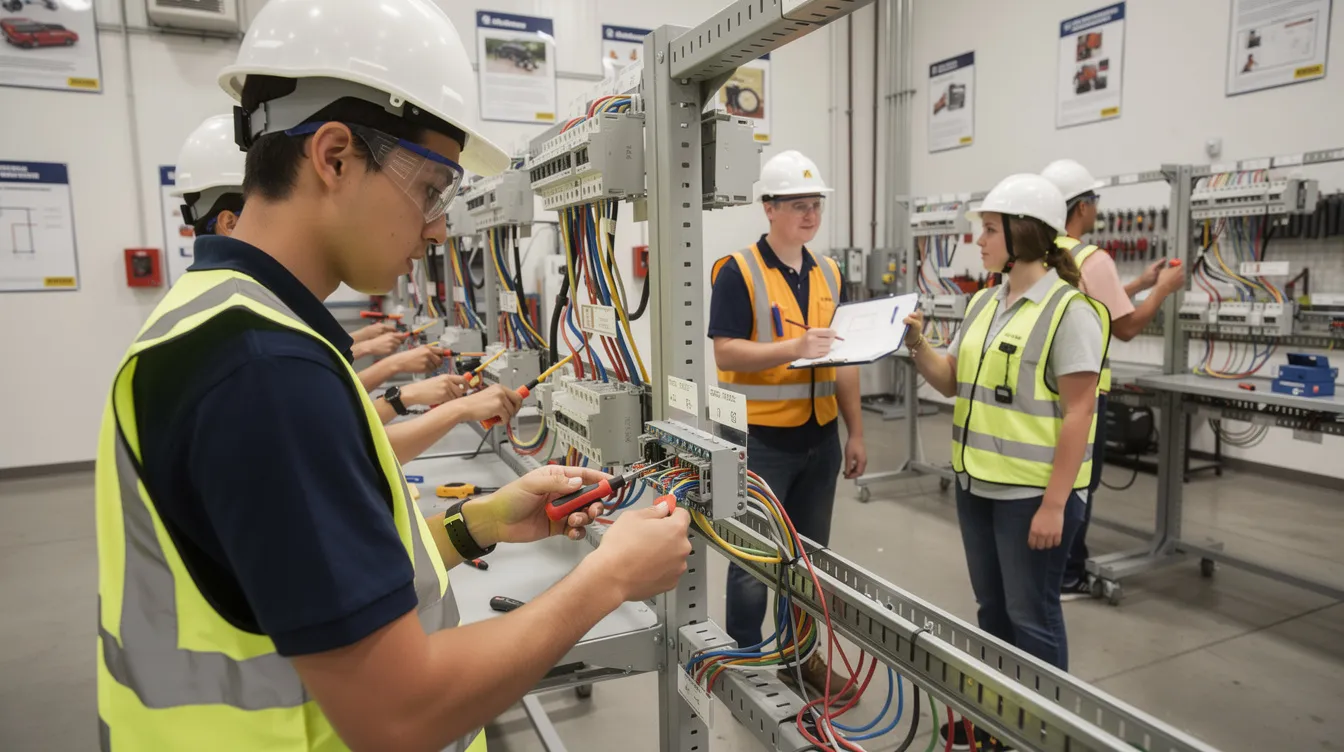
- Regional dual-enrollment training: This pathway gives students earlier exposure to framing, electrical, welding, HVAC, and related trade skills.
- Veteran recruiting: GI Bill-eligible apprenticeship pathways can make construction more accessible for transitioning service members.
- Career changers: Adults coming from manufacturing, logistics, maintenance, or adjacent industries may bring work habits and mechanical aptitude that transfer well into construction.
The practical lesson is to stop relying on a single source of candidates. A broader funnel gives Tennessee contractors more flexibility when market competition rises in Nashville, Knoxville, Chattanooga, Kingsport, Johnson City, and Bristol.
Turning Interest Into Apprentices and New Hires
Many workforce efforts fail at the handoff stage. A student visits a training center, a veteran asks about opportunities, or a career changer shows interest at an event, but the next step is unclear or too slow. That is where contractors can lose promising candidates.
A stronger process usually includes:
- Prompt follow-up after events or referrals
- Simple screening for reliability, work readiness, and baseline qualifications
- Clear explanation of what the job involves and what advancement can look like
- Early exposure to jobsites, shop environments, or mentors where appropriate
- A documented onboarding process for apprentice-level hires
For companies using ABC Greater Tennessee apprenticeship pathways, timing matters. The chapter’s apprenticeship application page states that applications for the 2026-2027 school year were due August 14, 2026, with classes beginning the week of September 14, 2026. Because those dates are already past, contractors should use the current application page as the reference point for the next reopening rather than relying on last year’s calendar.
That is an important planning point: recruiting and onboarding should align with actual training cycles. If a company waits until a deadline is near or already passed, it may miss an intake opportunity and delay a candidate’s start.
Retention Is the Second Half of the Pipeline
Recruiting matters, but a workforce pipeline doesn’t work if people leave before they become productive, long-term contributors. That is why retention is not a separate topic from pipeline planning. It is part of the same system.
Tennessee contractors can strengthen retention by focusing on a few fundamentals:
- Clear expectations: New workers should understand schedules, reporting lines, jobsite standards, and how advancement works.
- Mentorship: Apprentices need field leaders who can teach, correct, and encourage without creating confusion.
- Visible progression: Workers are more likely to stay when they can see how training connects to responsibility and pay growth.
- Professional jobsite culture: Respect, accountability, and day-to-day communication shape whether people want to build a career with your company.
- Leadership development: A strong apprentice pipeline eventually depends on strong foremen and supervisors.
This is one place where related programming matters. ABC Greater Tennessee’s foreman development resources can support field leadership retention by helping supervisors coach and manage crews more effectively.
Connecting Safety, Culture, and Merit Shop Expectations
A construction workforce pipeline is not just about filling positions. It is about developing people who can work safely, productively, and professionally on real jobsites.
That means introducing safety and culture early, not treating them as add-ons later. New workers need to understand company expectations, reporting practices, and jobsite responsibilities from the beginning. Apprentices also need to see that advancement is tied to performance, skill growth, and reliability.
For merit shop contractors, that message is part of the value proposition. A pipeline works better when workers understand that progress comes from demonstrated ability and sustained performance. That gives companies a practical framework for connecting training, evaluation, and advancement.
What Contractors Should Track
If workforce is a real operating priority, you should measure it. Contractors do not need a complex dashboard to start, but they do need visibility into whether the pipeline is producing results.
Useful internal metrics can include:
- Applicants by source
- How many candidates convert into hires or apprentices
- One-year retention for apprentice-level hires
- Apprentice counts by trade and year
- Which supervisors or crews retain and develop people more effectively
The goal is not to create bureaucracy. It is to spot weak points in the system. If candidates regularly disappear after first contact, your follow-up may be the problem. If apprentices leave under the same supervisors, coaching or leadership development may need attention.
How ABC Greater Tennessee Can Support Your Construction Workforce Pipeline
ABC Greater Tennessee already has several pieces of the pipeline infrastructure that contractors need. The Construction Trades Academy in Nashville and Knoxville provides the central apprenticeship platform. The START Center Knoxville helps widen access to training in East Tennessee. Regional dual-enrollment efforts give students earlier exposure. Related safety, leadership, and workforce development programming can support retention after hiring.
If your company wants to make workforce planning more deliberate, the next step is practical: identify the trades you need most, assign internal ownership for your pipeline strategy, and review the current apprenticeship application information for future intake timing.
The companies in the strongest position three years from now are not the ones that post the most urgent job ads. They are the ones building a repeatable construction workforce pipeline now.

FAQ: Construction Workforce Pipeline for Tennessee Contractors
Below are answers to common questions about this topic.
How long does it take to see results from a construction workforce pipeline?
Some benefits can appear relatively quickly, such as better follow-up, clearer candidate flow, and more predictable onboarding. The larger payoff from apprenticeship usually develops over multiple years as workers gain experience and move into higher-skill roles.
Do small contractors need a formal pipeline?
Yes, but “formal” does not have to mean complicated. Even a smaller contractor can define target trades, choose recruiting channels, assign one person to own follow-up, and build around an apprenticeship partnership instead of relying on last-minute hiring alone.
Can a company participate in apprenticeship if it has never sponsored apprentices before?
Yes. Contractors can explore sponsorship and participation through ABC Greater Tennessee’s Construction Trades Academy. The chapter can help firms understand the process, expectations, and timing.
What if our work spans multiple Tennessee markets?
Many contractors work across Middle and East Tennessee rather than in one city alone. A centralized training strategy can still work if the company carefully coordinates field assignments, mentor support, and class schedules.
What is the best first step for a contractor starting from scratch?
Start by identifying one or two trades where labor pressure affects delivery most, then map how your company currently recruits, onboards, trains, and retains people in those trades. From there, connect with ABC Greater Tennessee about apprenticeship and workforce development options that fit your needs.