Key Takeaways
- Digital construction tools give Tennessee contractors real-time data on asset usage, locations, and maintenance status, helping them counter tariff-driven equipment and material cost increases with disciplined operations instead of guesswork.
- Smarter asset management across construction sites, covering everything from excavators to generators, leads directly to cost savings, better asset utilization, and fewer costly delays that blow up schedules.
- Practical tools like telematics, equipment tracking software, digital daily reports, and safety dashboards are already in daily use on job sites in Nashville, Knoxville, Chattanooga, and the Tri-Cities.
- Better equipment and asset-usage data also improve compliance, reduce energy consumption and idle time, and extend asset life through preventative maintenance.
- ABC Greater Tennessee can help members build a step-by-step technology roadmap for contractors who want to modernize equipment control and protect margins in a challenging cost environment.
Why Tariff Pressure Makes Equipment Discipline A Margin Issue In Tennessee
Elevated equipment and material prices, driven by lingering tariff and supply chain pressures since around 2018, are squeezing margins for every Tennessee construction company operating in Nashville, Knoxville, Chattanooga, Kingsport, Johnson City, and Bristol. Steel tariffs have doubled from 25% to 50%, and the effective U.S. import tariff rate hovers near 11%, pushing construction material costs up roughly 6% relative to 2024 levels. Risk management helps control costs and maintain productivity, yet many firms still lack the data to act on what they already own.
Here is what those numbers mean on the ground:
- Higher replacement costs for heavy equipment, attachments, batteries, and components mean every hour of idle or misplaced gear on construction sites costs more than it did before 2018.
- Major OEMs like Caterpillar warn that tariff-related costs will total roughly $1.5 billion to $1.8 billion this year, and studies show importers bear nearly 94% of tariff costs, meaning those increases hit contractors directly.
- Replacement parts, steel-fabricated attachments, and battery packs can run 40% to 50% higher than pre-tariff pricing, adding $15,000 to $30,000 or more in annual cost for a contractor budgeting $100,000 in attachments.
Contractors with strong backlogs along the I-40, I-75, and I-24 corridors cannot simply pass all of this through to project owners. Many public and commercial contracts are fixed-price or competitively bid, so hidden waste in asset usage, fuel costs, and rental spend becomes a competitive disadvantage. Construction Executive has highlighted smarter asset management as a practical response to these tariff pressures, and this article focuses on how Middle and East Tennessee firms can act locally, turning equipment discipline into a margin advantage.
What Digital Construction Tools Mean For Equipment And Asset Management
Digital construction tools are practical software and hardware solutions that capture, share, and analyze field data in real time, from equipment tracking software and digital daily reports to safety dashboards and maintenance apps. Digital construction tools improve efficiency and collaboration by centralizing data so that every decision-maker works from the same information. Connected cloud ecosystems consolidate financials and project controls into a single source of truth, while cloud-based platforms offer centralized documentation to reduce communication gaps.
Specific examples relevant to Tennessee contractors include:
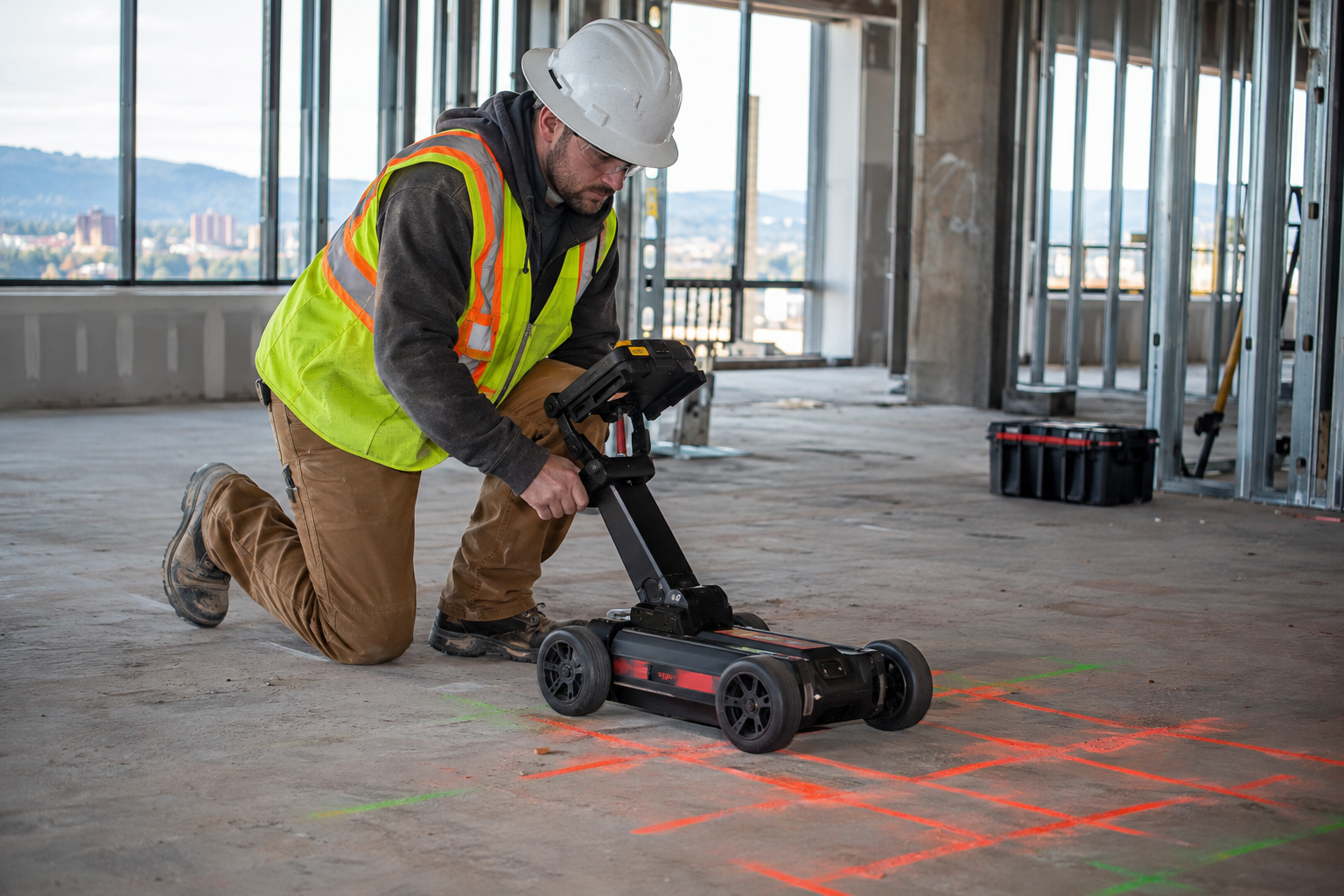
- GPS and telematics installed on heavy equipment to monitor location, engine hours, idle time, and fault codes.
- QR or barcode tags for small tools, attachments, and trailers with mobile app check-in and check-out.
- Cloud-based inventory management systems that sync field data automatically with the office.
- Digital forms and safety dashboards that replace paper logs and flow into centralized reports.
These tools create a single platform where project managers and shop managers can see what equipment each crew has, how long it has been idle, and what it costs to run. Digital construction tools support real-time project control through integrated workflows, connecting the field to decision-making in minutes rather than days. ABC Greater Tennessee’s technology roadmap for contractors provides a broader framework for firms looking to connect this equipment discipline to a full digital operations strategy, alongside a connected construction playbook for related safety and visibility resources.
The goal isn’t to buy gadgets for their own sake. It is using simple, field-proven tools to improve asset utilization, protect assets, and support safety and compliance across every job site.
The Equipment Data Points That Protect Margins
Most Tennessee contractors already own the right iron, but lack consistent, job-level data about how that iron is actually being used. Asset utilization measures efficiency in generating revenue, and high asset utilization indicates effective use of physical assets. The asset utilization ratio is calculated as total revenue divided by total assets, and higher asset utilization ratios reduce holding costs and excess inventory. Low asset utilization may suggest underused resources or inefficiencies, which is exactly what digital tools are designed to expose.
Here are the core data points to track:
- Equipment location by project site: Know where every piece of heavy equipment, trailer, and tagged tool is right now.
- Run hours versus idle hours: Industry data shows many fleets average 28% to 30% idle time on heavy machines. For a mid-sized fleet of 30 machines at 35% idle, annual idle fuel cost alone can exceed $50,000 to $80,000.
- Fuel and energy consumption: Gallons per hour, per job, per asset class. Identify which machines burn the most fuel for the least output.
- Last usage date: Flag equipment that has not moved or operated in days or weeks to detect underutilized assets.
- Maintenance status: Track inspections, preventive service intervals, and repair backlogs. Maintenance records help identify trends and recurring issues so teams can see when equipment needs necessary repairs before failures escalate.
- Fault or alert codes: Onboard diagnostics and telematics fault codes provide real-time alerts for emerging problems, helping crews respond faster and reduce downtime.
- Rental start and stop dates: Document exactly when rented equipment arrived, was used productively, and left, so you avoid paying for days it sat idle.
Utilization reporting maximizes profitability by identifying inefficiencies across both owned and rented equipment, exposing duplicate rentals and opportunities to move machines between job sites instead of renting more. Real time tracking prevents theft and improves asset recovery for high-value items.
Small asset usage matters too. Digital tags on generators, pumps, compactors, and ladders reduce lost tools, shrinkage, and unplanned repurchases that quietly erode profit on every construction project.
Accurate asset usage data also improves compliance. Firms can prove inspections, maintenance, and operator checks were done on time through time-stamped inspection reports, satisfying regulators or owners without scrambling for paperwork.
How Digital Construction Tools Improve Asset Utilization On Active Jobsites
Consider a Nashville healthcare expansion or a Knoxville industrial site where a single crane or excavator sits idle for several days, delaying downstream trades and forcing rush rentals or overtime. Without real-time location tracking and status data, dispatchers may not know the machine is available until after a duplicate rental is already on its way.
Equipment tracking software and telematics send real-time data from heavy equipment and trailers back to a central dashboard, allowing site managers to see what is idle and reassign it quickly. IoT devices improve safety monitoring and provide continuous operational data, while reality capture tools like drones provide accurate site data for documentation and progress verification. Digital twins use real-time data from sensors and drones to mirror on-site progress, adding another layer of visibility.
Practical applications on active Tennessee job sites include:
- Using digital daily reports and production tracking to tie equipment time directly to quantities installed (cubic yards, linear feet, tons), helping foremen identify patterns where output is low relative to machine hours.
- When project teams know through live data that an asset has been idle for several days in Chattanooga but is needed in Johnson City, they can schedule a move before renting another unit.
- Mobile tools enhance on-site productivity and communication for construction teams, ensuring that field decisions happen faster and with better information.
- Real-time data collection is essential for compliance verification, so every hour of operation is documented automatically.
Better asset utilization reduces fuel burn and energy consumption because machines are used intentionally. Industry research shows 10% to 30% of fuel consumed by construction machinery is from nonproductive idling. Even modest reductions in idle time deliver significant fuel and maintenance savings across the project lifecycle.
Own, Rent, Share, Or Retire: Using Data To Make Better Equipment Decisions
Tariff and supply chain pressures make it risky to rely on instinct for buy-versus-rent decisions, especially for specialized heavy equipment and large attachments. Effective asset utilization optimizes supply chain management by matching fleet size to actual demand, not assumptions.
Contractors can use utilization reports from digital tools to categorize their physical assets:
- Machines consistently above 60% to 70% utilization across multiple jobs may justify ownership, especially when recurring Tennessee highway or distribution center work keeps them busy.
- Rarely used machines, those under 40% utilization, may be better rented on a project-by-project basis or shared with partner firms.
- AI-powered tools detect potential schedule delays and cost overruns early, helping project managers anticipate equipment-demand spikes and plan accordingly. Advanced scheduling tools integrate cost information for improved budget control, tying fleet strategy to backlog and bid pipeline.
Historical job data from Middle and East Tennessee projects informs long-term fleet strategy. If recurring work along I-40 or I-75 demands specific equipment frequently, ownership pencils out. For one-off specialty needs, renting or sharing is the smarter play.
Low utilization combined with high repair costs should trigger a “retire or sell” conversation, freeing capital to reinvest in more productive assets or technology. Strong digital records also help contractors negotiate better rates and terms with rental houses, since they can document exactly how long equipment was in productive use and when it left the site.
Preventative Maintenance, Compliance, And Safety: Going Beyond Uptime
Unplanned equipment breakdowns are especially disruptive in a labor-constrained Tennessee market where an estimated 500,000 U.S. construction jobs will remain unfilled by 2026. When skilled operators and technicians are hard to replace, every hour of unplanned downtime costs more. Preventative maintenance reduces downtime and costly repairs, and regular inspections can detect early signs of equipment wear before a minor issue becomes a catastrophic failure.
Maintenance platforms integrated with telematics generate preventative maintenance schedules based on engine hours, fault codes, hydraulic pressures, or OEM recommendations. Preventive maintenance optimizes equipment performance and energy efficiency, while using OEM parts extends equipment lifespan and protects warranty coverage. Maintenance scheduling driven by actual usage data replaces arbitrary calendar-based service intervals with precision.
Safety and compliance benefits are equally significant:
- Digital safety tools can reduce incident rates by 20% to 35%, and centralized dashboards can achieve 95% compliance rates across multiple job sites.
- AI-powered cameras detect unsafe behaviors in real time, adding a layer of protection beyond manual observation. Wearable technology can predict impairment with 85% accuracy, helping prevent incidents before they occur.
- Digital incident reporting enables faster response times and trend recognition, so when incidents occur, the data is already captured for analysis and corrective action.
- Digital inspection checklists for cranes, forklifts, aerial lifts, and other heavy equipment can be completed on a tablet or phone, with photos and signatures feeding into a centralized safety dashboard.
- Digital logs automatically time-stamp inspections, services, and repairs, which helps improve compliance with OSHA requirements and safety standards while reducing paperwork. Insurance premiums have increased by 15% to 20% annually due to claims, making documented safety protocols and worker safety programs a financial priority, not just an operational one.
ABC Greater Tennessee’s connected construction playbook and safety training programs support this approach, and a strong maintenance record also supports STEP performance and reduces overall incident risk, helping reduce accidents across every site.
A Practical Equipment-Management Playbook For Tennessee Contractors
This section lays out a simple 90-day plan for firms that want to modernize equipment control without overhauling every system at once. Training and change management are critical to adopting digital construction workflows, so the plan builds habits before adding complexity.
Month 1: Foundation
- Perform a full inventory of owned and rented assets, including small tools and trailers.
- Assign each asset to a responsible superintendent or shop manager.
- Standardize equipment naming conventions across all projects.
- Implement a basic digital check-in and check-out process using QR codes or a simple mobile app.
Month 2: Pilot and Refine
- Start with a pilot on one or two job sites in Nashville or Knoxville.
- Begin collecting utilization, idle time, and maintenance data digitally.
- Set up weekly utilization and idle-time reviews between project managers, foremen, and accounting so that rental decisions and equipment moves are based on data instead of assumptions.
- Automated processes reduce manual reporting in construction project management, so look for tools that pre-populate fields from time card entries or telematics feeds.
Month 3: Expand and Integrate
- Roll the process out to additional job sites based on lessons learned.
- Building Information Modeling (BIM) integrates design, scheduling, and cost control for firms ready to connect equipment data to broader project workflows.
- Review fleet decisions monthly: identify assets to move, retire, rent, or purchase.
ABC Greater Tennessee’s technology roadmap for contractors and pipeline and digital tools guide offer additional resources for teams building a broader digital stack around this playbook.
Making Field Adoption Easy: Digital Tools That Work For Superintendents And Foremen
The biggest barrier to equipment-tracking success is not software. It is whether superintendents, foremen, and operators find the tools simple enough to use during demanding days. Human error in data entry and reporting is the primary risk when digital workflows add friction instead of removing it.
Features that matter to field leaders:
- Mobile apps that work offline in areas with poor cell coverage, common on rural East Tennessee sites.
- Quick QR scans for tool sign-out that take seconds, not minutes.
- Simple drop-down menus instead of long forms, with automatic population of digital daily reports from time card or telematics data.
- Digital models improve collaboration among architects, engineers, and contractors, meaning field data feeds into decisions beyond just the equipment yard.
Digital construction tools should reduce admin burden by eliminating duplicate data entry between field logs, safety forms, and equipment records, not add another layer of paperwork. Robotics and automation improve speed and consistency in construction tasks, and the same principle applies to data collection: automate what you can so crews can focus on critical work.
Encourage leadership to provide short, hands-on proper training sessions, integrated into existing toolbox talks or ABC Greater Tennessee management education offerings, rather than lengthy classroom days. Track adoption metrics like percentage of equipment moves recorded digitally or percentage of daily reports submitted on time. Celebrate crews who hit targets to reinforce the culture change. When field teams see that tools save time and prevent problems, adoption accelerates.
Resilience, Bidding Confidence, And Merit Shop Advantage
Tight equipment discipline, supported by digital tools, gives Tennessee contractors more confidence when bidding complex projects because they know the true cost, capacity, and site conditions of their fleets. Construction risk management identifies and mitigates project risks, and AI and machine learning enable predictive analytics, allowing firms to anticipate equipment and schedule issues before they become emergencies.
Strong asset management supports schedule reliability on major regional work: hospital expansions in Nashville, manufacturing and logistics facilities along I-40 and I-75, and infrastructure projects serving fast-growing communities. By minimizing downtime and optimizing operational efficiency through data-driven decision-making, you protect both margins and relationships with owners who depend on reliable performance.
This connects directly to the merit shop model and free-enterprise principles. Open competition rewards contractors who can deliver work safely, ethically, and efficiently through disciplined operations, not just the lowest bid. Better equipment visibility strengthens risk reduction and contract execution. ABC Greater Tennessee’s construction leadership skills article offers additional perspective for readers who want to align asset decisions with broader project leadership practices.
In a market where 500,000 U.S. construction jobs will remain unfilled by 2026, protecting people through safe, well-maintained equipment and jobsite safety while protecting margins through data-driven asset usage decisions is a long-term competitive advantage. Equipment-level performance, productivity, and efficiency compound into company-level resilience.
What Tennessee Contractors Should Do Next
If your team cannot answer in five minutes where every asset is today, how often it is used, and what it costs to run, that gap is costing you money in a tariff-elevated market. The right tools and a focused implementation plan can close that gap before the next bid cycle.
Start here:
- Self-assessment: Can you locate every piece of owned and rented equipment right now? Do you know each asset’s utilization, maintenance status, and cost per hour? If not, digital tools should be a near-term priority.
- Pick one or two high-impact improvements: Implement basic equipment tracking software on heavy equipment, or shift from paper to digital daily reports and safety dashboards that include equipment fields. Use these to optimize inventory levels and reduce unplanned downtime.
- Engage with resources: Explore ABC Greater Tennessee’s technology roadmap for contractors, review the connected construction playbook, or join ABC to access peer insights, training programs, and education on digital operations.
Connect with ABC Greater Tennessee leadership or committees to share technology challenges, learn from member success stories, and build a realistic implementation plan tailored to Middle and East Tennessee markets. Whether you start with a QR tag on every generator or a full telematics rollout, the proactive approach is to act now, measure results, and build from there.
Frequently Asked Questions About Digital Construction Tools And Equipment Management
Below are answers to common questions about this topic.
How quickly can a mid-sized Tennessee contractor see cost savings from digital equipment tracking?
Many mid-sized contractors see early cost savings within one or two quarters by reducing duplicate rentals, recovering misplaced assets, and cutting idle time. For example, eliminating one unnecessary $ 3,000-per-month rental because the team can see a similar unit is idle in Chattanooga and can be moved to Nashville saves $36,000 annually from a single decision. The speed of savings depends on how consistently field teams use the tools and how often leaders review and act on the data. Stock levels and inventory management visibility play a crucial role in accelerating those early wins.
Do digital construction tools only make sense for large fleets with dozens of machines?
Smaller contractors with 10 to 20 pieces of heavy equipment, plus trailers and small tools, often benefit the most because a single lost skid steer or trailer can erase profit on an entire job. Smaller firms should start with simple, low-friction tools like QR-based check-in and check-out and digital daily reports before layering on more advanced predictive analytics or telematics. The goal is right-sized asset management, not copying the complexity of a national fleet operator. Even basic digital workflows reduce equipment issues that stem from paper-based tracking.
How can contractors protect data privacy and build trust when tracking equipment and crews?
Clearly communicate that the purpose of tracking is asset management, site safety, and schedule reliability, not micromanaging every worker movement. Establish written policies describing what data is collected, how long it is stored, and who can access it, then review these during orientation or toolbox talks. Share positive examples of how data prevented unsafe conditions, helped avoid a breakdown, or kept a crew from unnecessary night work. Ensuring adherence to transparent policies builds trust and reinforces that digital tools support the field rather than punish it. Where high temperatures or other hazardous conditions exist, real-time alerts tied to equipment and environmental sensors show the system’s protective value.
What if our current mix of software platforms is fragmented and hard to integrate?
Many Tennessee contractors already use separate systems for accounting, project management, and safety, creating data silos that limit visibility. Choose new digital construction tools that offer open APIs or built-in integrations so equipment data can flow into existing dashboards or reports over time. A phased approach works best: focus first on getting reliable asset data in one place, then work with vendors or consultants to streamline connections. The industry is trending toward platforms that consolidate resources into a single ecosystem, reducing the friction of managing separate tools for every function.
Where can Tennessee contractors get help evaluating and implementing digital construction tools?
ABC Greater Tennessee is a regional resource that connects members to peer contractors, education events, and a broader technology roadmap for contractors focused on Middle and East Tennessee realities. ABC’s management education and workforce development training programs can help train project managers, foremen, and apprentices to use digital tools effectively in day-to-day operations, with an emphasis on incident response readiness and improving compliance across the board. Reach out through ABC Greater Tennessee’s website or committees to start a conversation about practical next steps tailored to your company’s size, trade mix, and market focus.