


On any given day across Middle and East Tennessee, electricians, plumbers, inspectors, and project managers are working out of sight or hearing range of anyone who could help if something goes wrong. Lone worker construction risk is both an emergency-response problem and a well-being issue, and Tennessee contractors need a practical plan that addresses both.
Key Takeaways
Lone worker construction refers to any situation where a construction worker operates without close contact with others, meaning help would be delayed if an injury, medical event, or emergency occurs.
- Tennessee contractors should manage lone worker safety as both an emergency-response and wellbeing issue, not simply a technology purchase.
- OSHA does not have a single standard that covers all aspects of working alone, which means employers often need clear internal procedures, check-in rules, and escalation steps for higher-risk lone-work situations.
- Common lone-worker roles on construction sites include electricians, plumbers, service technicians, inspectors, delivery drivers, security personnel, and project managers who move between floors, roofs, remote pads, and dispersed projects along I-40, I-75, and I-24.
- Combining practical controls such as clear communication, emergency alerts, fall detection where appropriate, and task-based check-ins with a Total Human Health approach can strengthen both incident response and day-to-day support for isolated workers.
- A simple end-of-article checklist gives leaders in Nashville, Knoxville, Chattanooga, and the Tri-Cities a way to review lone-worker safety on current projects this week.
Why Lone Worker Construction Deserves Attention Now
On a typical commercial construction site in Nashville or Knoxville, at least one worker is likely to be alone in a stair tower, on a rooftop, or driving between project locations at some point during the day, even when the job is busy overall. That matters because working alone can quickly turn an ordinary incident into a serious emergency.
Lone worker safety means managing risk when a worker is out of immediate sight or hearing range of others, so an injury, medical event, or act of violence could go unnoticed long enough to become far more dangerous. OSHA says no general standard requires another employee to be present when someone works alone, except in a few specific situations. OSHA instead encourages employers to develop emergency procedures for employees who work alone and to consider providing a wireless notification device or cell phone.
That regulatory gap matters because wellbeing is already a serious construction safety concern. CDC/NIOSH says construction workers are five times more likely to die from suicide than from a workplace injury. Separately, a Construction Executive article on the hidden impact of working alone helped spotlight how lone-worker conditions can intensify uncertainty, isolation, and the need for stronger day-to-day support. This article is ABC Greater Tennessee’s field-focused response for contractors across Middle and East Tennessee.

What Counts as a Lone Worker Situation on a Tennessee Construction Site?
A lone worker is any employee working without close contact with others long enough that help would be delayed in an emergency, even if other crews are technically on the same construction site. The biggest risk is not being the only person on the property. It is whether a second person could realistically see or hear trouble and reach the worker quickly.
Specific job roles and tasks that commonly create lone-working conditions in Tennessee include:
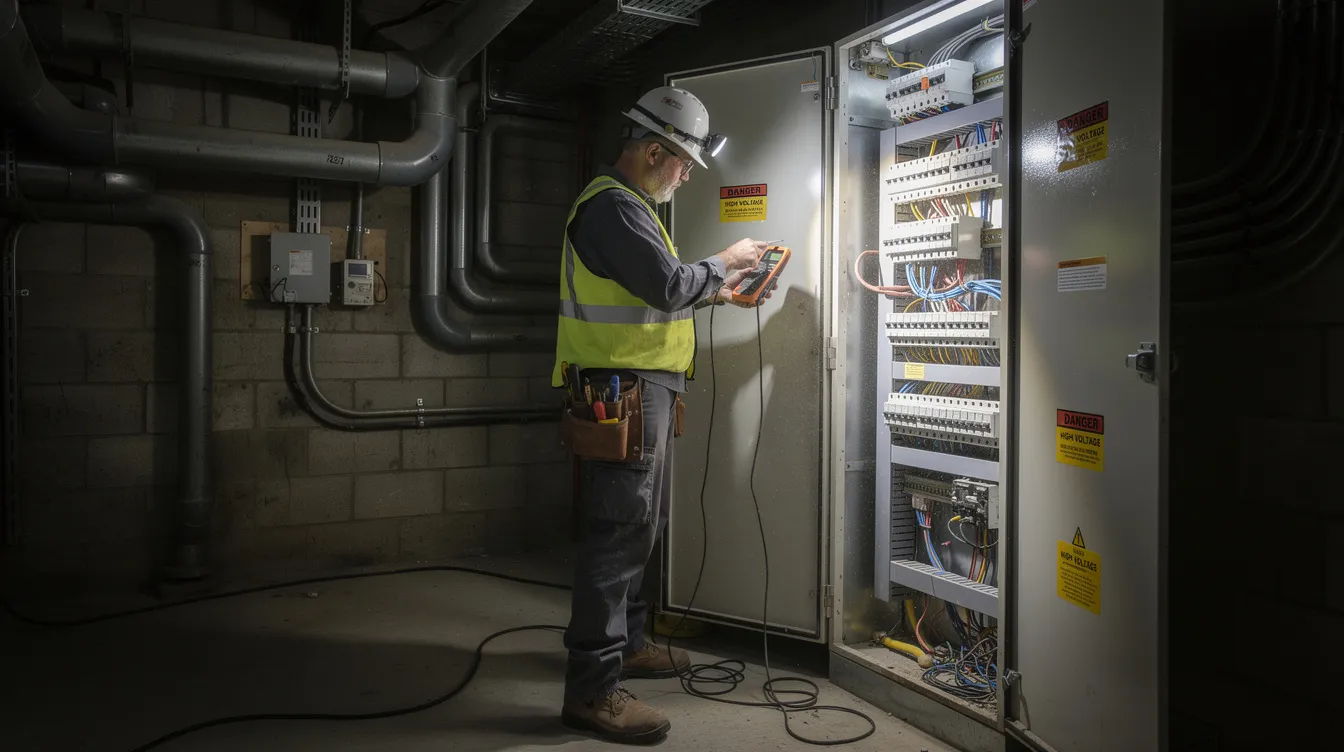
- Electricians doing service work in mechanical rooms or troubleshooting panels on upper floors
- Plumbers finishing punch lists on a floor separate from active crews
- HVAC technicians on isolated roofs or in remote equipment rooms
- Inspectors and project managers walking jobs alone early in the morning, at night, or between active work zones
- Small crews or single workers on highway projects along I-40, I-75, and I-24 performing night traffic control, bridge component inspection, or equipment fueling at remote laydown yards
- Delivery drivers arriving at unstaffed or partially staffed sites
These scenarios can create risks that require controls beyond standard jobsite routines.
How Working Alone Changes the Risk Picture: From Hazards to Wellbeing
Lone-working risks are not about a new type of hazard. They are about how ordinary construction hazards can become more severe when no one is nearby to notice or respond.
Construction hazards that can carry higher consequences when a worker is alone include:
- Falls from ladders, scaffolds, or roofs
- Struck-by incidents involving equipment or materials
- Electrical shock during troubleshooting or service work
- Heat illness in remote exterior areas
- Medical events while driving between projects
When a worker is alone, delayed discovery can make injuries and medical events more dangerous because no one is present to call for rapid assistance or provide immediate support.
Fatigue and environmental conditions can also affect lone workers’ decision-making. Isolation may increase stress, narrow attention, or reduce a worker’s willingness to speak up about a concern. ABC’s Total Human Health approach treats mental health, stress, and psychological safety as part of everyday safety planning, which is especially relevant for workers who spend long stretches without contact.
OSHA Guidance and Employer Duties for Lone Workers
OSHA does not have a single standard that covers all aspects of working alone. However, employers still have a broad duty to provide a workplace free from recognized hazards that are causing or are likely to cause death or serious physical harm. In practice, that means contractors should address lone-worker risks through the same hazard-recognition and planning discipline they apply to other safety exposures.
Several existing OSHA standards can affect lone-worker situations, depending on the task:
- Fall protection rules for work at height
- Permit-required confined space entry rules that require attendants and communication procedures
- Electrical safety requirements for specific energized-work situations
- Hazard communication when chemicals or other hazardous substances are involved
The important distinction is that these requirements come from the underlying hazard or task, not from a single standalone OSHA lone-worker rule. That is why many contractors choose to create a written lone-worker policy, documented check-in expectations, and clear missed-contact escalation steps as a best practice rather than relying on improvisation.
In Tennessee, TOSHA Consultative Services offers no-cost help to employers who want assistance identifying hazards and improving safety and health management systems. For contractors reviewing lone-worker communication procedures or emergency-response planning, that can be a useful outside resource.
Designing a Practical Lone Worker Safety Policy for Construction
A lone worker safety policy should be a focused part of a company’s overall health and safety program, not a separate manual that sits untouched. It should be simple enough for foremen, superintendents, and workers to use in the field.
Build your policy around these elements:
Define who counts. List the roles, tasks, and site conditions where workers are routinely out of sight or hearing range of others.
Review the task before assigning it. For higher-risk work, decide in advance whether the task is appropriate for one person, what communication method will be used, and how quickly help could realistically arrive if needed.
Set “never alone” rules. Some activities should not be treated as true lone work. Examples may include permit-required confined-space entry, certain energized work, complex rigging, or demolition and structural tasks where immediate backup or oversight is necessary.
Spell out control measures. The policy should describe communication expectations, check-in timing, supervisor responsibilities, emergency alerts, and what happens when contact is lost.
Integrate, don’t isolate. Fold lone-worker expectations into orientation, pre-task planning, supervisor training, and toolbox talks. ABC Greater Tennessee Safety Programs and the STEP safety management system offer useful structures for building that consistency.
Building Effective Check-In, Communication, and Emergency Alert Procedures
The most important operational question for any lone worker is: “If something goes wrong, who will know, how quickly, and what exactly will they do?” Communication routines should answer that clearly.
Choose check-in intervals based on risk level. Higher-risk tasks or more remote locations usually call for more frequent contact than low-risk administrative lone work.
Use task-based check-in patterns. Structure procedures around construction activities: contact at arrival, before starting a higher-risk task, at completion, and at departure. This is often more reliable than a time-only schedule.
Document escalation steps. A missed check-in plan might include:
- Attempt phone or radio contact
- Send the nearest supervisor or crew member to the worker’s last known location
- Search the area if contact is still not made
- Notify emergency services if the worker cannot be located or appears injured
Train workers and supervisors. Training should cover device use, check-in expectations, and the response chain. The goal is not to guarantee an outcome. It is to make the response more consistent and less dependent on guesswork during an actual emergency.
Using Lone Worker Safety Technology Without Losing the Human Element
Many Tennessee contractors are being pitched lone-worker safety tools focused on devices, apps, or dashboards. Those tools can help, but technology does not replace a thoughtful policy or trained supervisors.
Common tools used in lone-worker programs include:
| Technology | What It Can Help With |
|---|---|
| Smartphone apps with emergency alerts | Scheduled check-ins, manual panic buttons, and location sharing |
| Dedicated alarm devices | Panic-button access and faster notification |
| Construction wearables | Automatic alerts such as fall or immobility detection, depending on the device |
| Geofencing systems | Alerts when workers enter restricted or isolated zones |
| Monitoring dashboards | Visibility across multiple workers or projects |
| Mobile communication tools | Voice, text, and location-sharing support |
In higher-risk tasks at height or in remote locations, automatic fall or immobility alerts may be especially useful because they do not depend on the worker being able to trigger an alarm manually.
Tennessee contractors should also plan around poor cellular coverage in rural or mountainous areas, signal interference inside concrete or steel structures, and noisy environments where audio alerts may be missed. Test actual site conditions before depending on any single system.
Treat technology as one layer in a broader approach. Pair it with clear check-ins, practical training, and a response plan people can actually follow.

Supervisors’ Role: Spotting Hidden Lone Workers and Supporting Wellbeing
On a busy commercial project, leaders may assume no one is truly working alone. A walk-through often reveals something different: an apprentice in a distant stair tower, a technician on a remote roof, or a project manager visiting a satellite site without anyone tracking their location. Hidden lone-worker situations are common even on staffed jobsites.
Simple cues supervisors should watch for include:
- Workers assigned to remote corners of a site or separated by floors
- Employees who travel between locations during the day
- Tasks completed before or after main shift hours
- Workers at height or in mechanical spaces behind closed doors
A useful supervisor question is: “If this worker got hurt right now, how long would it take before anyone noticed?” If the answer is too long for the task and setting, you probably need extra controls.
Connect this to wellbeing by watching for sudden withdrawal, unusual fatigue, repeated errors, or comments that suggest stress or overload. Use ABC’s Total Human Health approach to guide supportive conversations. Integrating lone-worker safety and mental wellbeing into toolbox talks and one-on-one check-ins can strengthen trust and improve communication without turning supervisors into clinicians.
Tennessee Jobsite Lone Worker Checklist: A Quick Audit for This Week
Print this checklist or adapt it into a one-page form for current projects.
Who is alone?
- [ ] Identify every role and location where a worker operates out of sight or hearing range of others
- [ ] Include workers who travel between sites, arrive early, stay late, or work in isolated areas
How do they communicate?
- [ ] Confirm each lone worker has a tested communication method such as a phone, radio, or app
- [ ] Verify coverage at the actual work location, not just the site entrance
What happens if they miss a check-in?
- [ ] Document escalation steps from missed contact through physical search to emergency-services notification
- [ ] Confirm supervisors know the plan and have reviewed it
Who responds, and how fast?
- [ ] Map realistic travel times from the nearest crew to each lone-work location
- [ ] Confirm emergency contact information is current
Has wellbeing been considered?
- [ ] Verify lone workers know they can pause work and call a supervisor if conditions feel unsafe
- [ ] Confirm inclusion in recent Total Human Health toolbox talks or similar discussions
Use what you find to update your lone-worker procedures and align them with your broader safety system.
How ABC Greater Tennessee Can Support Lone Worker Safety and Total Human Health
ABC Greater Tennessee serves merit shop contractors who want to protect lone workers across Middle and East Tennessee while strengthening day-to-day safety leadership. The chapter’s Safety Programs can support policy development, training, toolbox talks, and broader safety-system improvement.
ABC’s STEP framework offers a useful structure for tracking and improving safety practices across projects. Lone-worker controls such as check-in compliance, communication drills, and emergency-response reviews can fit naturally inside that larger management approach. The chapter’s Total Human Health and related mental-health programming also give supervisors practical ways to address the human side of working alone.
Your next step: Review your current projects this week. Identify which roles are true lone-worker situations, confirm a reliable check-in method, and tighten your missed-contact procedure. If you want help strengthening the system behind those decisions, explore ABC Greater Tennessee Safety Programs.
Frequently Asked Questions About Lone Worker Construction Safety
These questions address practical concerns Tennessee contractors raise as they formalize lone-worker procedures.
How do I decide if a task is too high risk for a lone worker?
Start with the task itself. Consider what could go wrong, how quickly the situation could become serious, and how fast help could realistically arrive. Activities such as confined-space entry, certain energized work, heavy rigging, or work at height may call for a second person, an attendant, or a different work plan.
What should we do when cell coverage or radio reception is unreliable?
Test coverage during preconstruction or mobilization, then build the communication plan around actual field conditions. In lower-connectivity areas, contractors may need layered controls such as shorter check-ins, designated contact points, buddy arrangements, or different communication equipment.
How often should construction lone workers check in during a typical shift?
There is no universal rule. Check-in frequency should match the level of risk, the remoteness of the location, and how quickly conditions could change. Many contractors also find it helpful to tie check-ins to task milestones such as arrival, task start, completion, and departure.
How can we include subcontractors and temporary workers in our lone worker safety policy?
Make lone-worker expectations part of preconstruction meetings, site orientations, and task planning. Ask subcontractors to identify where their people may work alone, then align communication methods and emergency-response expectations before the work begins.
How does lone worker safety connect to broader mental health efforts?
Workers who spend long periods alone or travel frequently between sites may be less likely to mention stress, fatigue, or personal strain before those issues affect safe performance. That is why lone-worker check-ins can also be useful moments for supervisors to ask simple readiness questions and reinforce available support resources.