


The latest national nonresidential construction spending data confirm what Tennessee contractors have been feeling on the ground: data center demand is a major force shaping where money, labor, and equipment are flowing. For firms across Nashville, Knoxville, Chattanooga, and the Tri-Cities, Tennessee’s nonresidential construction spending trends now require immediate attention to bidding discipline, workforce allocation, and project sequencing heading into 2027.
Key Takeaways
The most recent national spending update underscores that data centers are not just growing; they are redefining the nonresidential construction spending landscape. Here is what Tennessee contractors need to know right now:
- Mission-critical data center work is driving a disproportionate share of national nonresidential construction spending growth, while many other segments have stagnated or declined.
- Tennessee contractors in electrical, mechanical, civil, structural, controls, commissioning, and safety roles will feel data center demand first, especially across Middle Tennessee and the I-40/I-75/I-24 corridors.
- Nonresidential construction spending Tennessee trends should immediately influence bidding assumptions, backlog quality reviews, and workforce planning for late 2026 and early 2027.
- Tennessee’s newer utility infrastructure cost rules for data centers fundamentally change contract assumptions that leaders must understand before pricing work.
- Even firms not pursuing data center projects directly will face knock-on effects in labor pressure, procurement timelines, and construction costs.

How the Latest Nonresidential Spending Update Puts Data Centers in the Spotlight
Total construction spending in August 2026 was $2,203.1 billion on a seasonally adjusted basis, and nonresidential categories continued to climb. But this growth is not broad-based. Data center projects are a major source of nonresidential strength, with data center construction spending rising more than 73% year over year. Since March 2026, that pace has accelerated to roughly 149% annualized. Producer prices rose sharply in September 2026, impacting costs across the board and making the spending picture even more complex.
When you strip data centers out of the equation, the rest of nonresidential construction spending has either stagnated or contracted. Manufacturing construction spending declined 6.7% in 2025, according to national estimates. Data centers have become one of the fastest-growing segments in Tennessee’s construction market and nationally, reinforcing that this trend is not a short-term blip.
To be clear, “data center” here includes AI, cloud, colocation, and enterprise facilities that require intensive power, cooling, and controls. This is not generic office space. Mission-critical construction tied to these facilities pulls heavily on specialty trades and high-skill supervision, magnifying its impact on the nonresidential construction spending Tennessee contractors experience on the ground. These are national signals, but Tennessee firms should treat them as an early warning and planning tool rather than assuming a uniform local boom.
Why This Nonresidential Construction Spending Signal Matters in Tennessee
Tennessee leaders cannot treat this as distant news. Private nonresidential construction spending in Tennessee reaches about $16 billion annually, and the state ranks among the top 10 for total commercial nonresidential construction spending. Tennessee experienced more than a 100% increase in commercial nonresidential construction spending in recent years, and the state’s total construction contribution to GDP rose to about $24 billion by 2024. Tennessee’s competitive business environment attracts high levels of private nonresidential investment, with the state attracting over $2 billion in capital investment annually. Construction spending generates direct, indirect, and induced economic impacts across every corridor in the state.
Rising construction material prices and labor availability constraints are affecting Tennessee’s construction market as data center demand intensifies. Tennessee’s commercial construction permit values remain elevated. State and local public spending for nonresidential projects totals around $7 billion, adding further volume. Middle Tennessee already faces intense competition for commercial construction projects, healthcare work, infrastructure jobs, and technology campuses, so additional data center demand tightens the same labor and supplier pools. Mega-projects also create significant job demand in Tennessee, such as the New Nissan Stadium, which generates over 19,000 jobs and further concentrates demand for skilled labor.
Knoxville and Oak Ridge corridors add industrial, research, and advanced manufacturing pull on the same mission-critical workforce, while Chattanooga and the I-24/I-75 corridors feel logistics and manufacturing demand alongside potential data center work. Even contractors without direct data center exposure will see knock-on effects in construction costs, labor pressure, and project timing as suppliers and trade partners commit capacity to mission-critical projects. Leaders should distinguish between headline national spending growth, their actual Tennessee opportunity pipeline, and the subset of work that is executable at acceptable risk and margin.
Data Center Demand, Mission Critical Construction, and Contractor Choices
This section is a decision guide, not a news recap. Data center work is mission-critical construction requiring tight tolerances, high power densities, redundant systems, and complex commissioning. It may not fit every company’s strengths.
Tennessee firms face a core decision with four practical options:
| Strategy | Best Fit |
|---|---|
| Pursue full data center prime roles | Firms with proven mission-critical experience, deep electrical/mechanical capacity |
| Pursue specialty or trade packages | Electrical, HVAC, controls, commissioning firms with relevant credentials |
| Support through utility and site work | Civil, structural, underground contractors positioned near data center corridors |
| Deliberately limit exposure | Firms whose core markets (healthcare, institutional, industrial) need protection from overextension |
Choosing the right role in data center projects matters more than chasing every opportunity. Contractors should evaluate where their best capabilities lie before pursuing direct data center contracts, especially given the schedule, coordination, and safety expectations that owner expectations demand in mission-critical projects.
Where the Pressure Shows Up First for Tennessee Contractors
The spending signal will not hit all firms equally. Tennessee leaders should pay closest attention to four areas where pressure will arrive first: labor competition, procurement pressure, utility and site-readiness timing, and margin risk inside backlog. What follows is a practical risk map, not an exhaustive technical treatise.
Labor Competition
Tennessee’s construction employment hovers around 162,000 workers, and the state recorded 251,000 construction job openings as of August 2026. Labor shortages affect electricians, HVAC technicians, and project managers in Tennessee. Nashville’s labor market is tight, affecting construction costs and skilled-trade availability. Ongoing competition for skilled labor remains intense in Tennessee’s construction sector, and tight labor markets drive high competition and wages for specialized construction trade workers across the state. Tennessee’s construction labor markets remain tight, affecting skilled trades at every level.
Large data center and mission-critical work intensifies this competition across Nashville, Knoxville, Chattanooga, and the Tri-Cities. Overlapping demand shortens bid windows, lengthens recruiting timelines, and increases the risk of crews being stretched across too many jobs, including non-data-center commercial work. Leaders should track where their most capable field leaders and mission-critical staff are assigned and avoid overconcentrating them on new data center work at the expense of healthcare, institutional, and industrial clients. Even firms not pursuing data center work may feel labor pressure as their trade partners and key employees are recruited into high-paying mission-critical roles.
Procurement Pressure
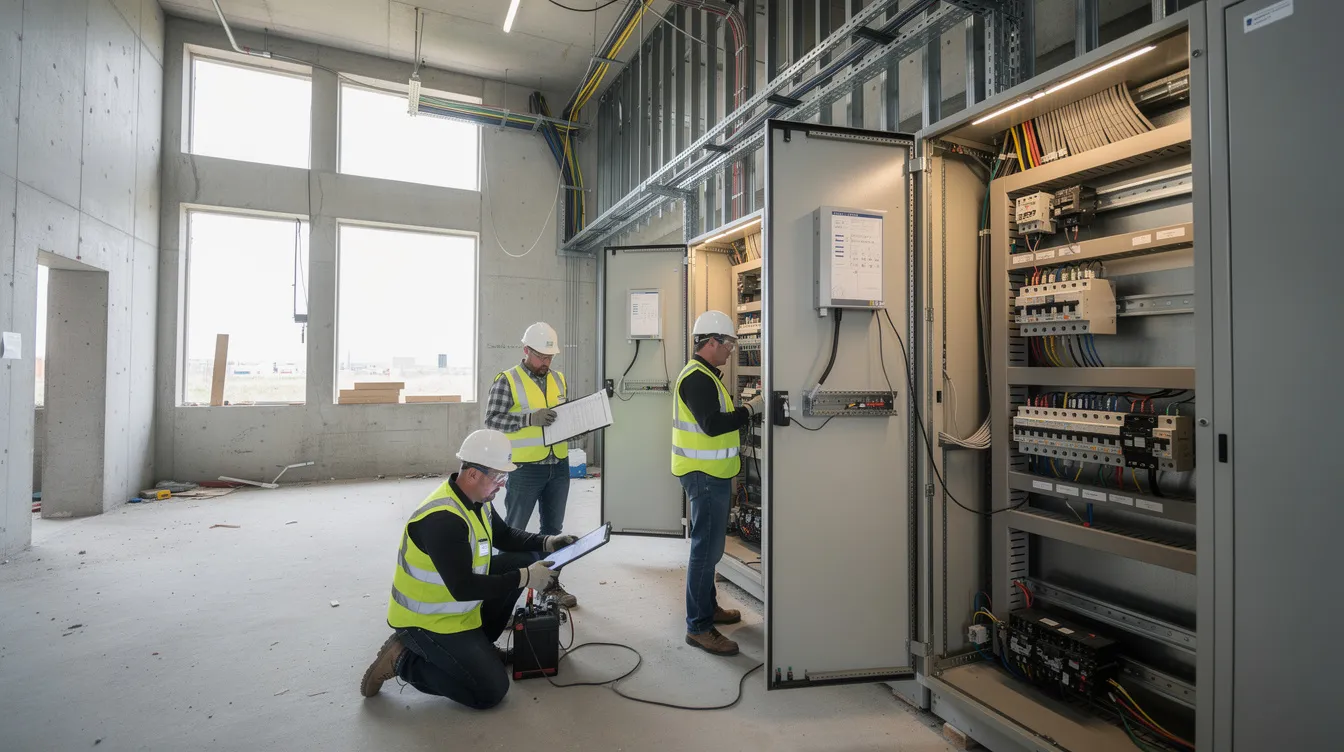
Large data centers place heavy orders for electrical gear, switchgear, UPS systems, generators, chillers, and specialized mechanical components, which can quickly absorb regional supplier capacity. Material pricing volatility continues to affect construction in Nashville and surrounding markets. Aggressive data center schedules often require early procurement and long-lead coordination, which can disrupt estimating assumptions on more routine commercial construction projects.
Tennessee contractors should recheck lead times and pricing for electrical and mechanical equipment on both current backlog and new bids, especially in Middle Tennessee where demand is layered across segments. Procurement teams should build contingency plans, alternative vendor options, and realistic delivery milestones into mission-critical bids to reduce change-order and schedule-slip risk.
Utility and Site-Readiness Timing
Announced data center demand and site selections do not automatically translate into shovel-ready projects. Power availability and substation work often drive the critical path. Tennessee’s mix of local siting, zoning, and electric service decisions means contractors must verify utility commitments, site-readiness milestones, and permitting status before committing scarce supervision and trade capacity to mission-critical jobs.
Firms should treat utility-coordination milestones as go/no-go checkpoints for staffing and major material releases. Civil, structural, and underground contractors should confirm site readiness and access conditions to avoid idle time and remobilization costs.
Margin Risk Inside Backlog
Rising nonresidential construction spending can create the illusion that more backlog automatically means more profit, which is not always true as input costs and labor availability shift. Contractor backlog rose to 8.5 months in August 2026, climbing further to 8.7 months in September. Industry data show that the roughly 15% of contractors with data center exposure averaged 11.3 months of backlog, about three months more than firms without that work. Whether this extra volume translates to profit backlog depends on contract terms, procurement status, and how tightly operations are managed.
Executives should segment backlog by project type, contract terms, procurement status, and data center or mission-critical exposure to identify where thin margins or unbought scopes may be hiding. Long-duration projects with heavy electrical and mechanical components are particularly vulnerable to price drift and schedule pressure created by new data center demand.
How Nonresidential Spending Trends Should Change Tennessee Bidding and Backlog Strategy
The September nonresidential spending update creates practical decisions for Tennessee leaders in the next 30 to 90 days. Contractors should tighten bidding assumptions as costs rise, revisit their pursuit strategy for commercial construction projects, and rank opportunities by fit, margin potential, and exposure to tight mission-critical labor and equipment categories.
Set clear company-wide capacity limits for senior project managers, superintendents, and key foremen across all work. Avoid silent overextension by relying on updated supplier quotes, realistic productivity assumptions, and contingency planning for critical electrical and mechanical items. Leaders should review their mix of commercial projects, healthcare, infrastructure, industrial, and mission-critical work, testing each new pursuit against its effect on existing clients and current workload while aiming for a portfolio that balances opportunity with executable capacity. The trend is clear: new construction volume alone is not a strategy. Discipline in pursuit is the differentiator.
Tennessee Utility-Cost Rules and Their Impact on Data Center Work
Tennessee has recently adjusted how municipalities and electric utilities can handle the cost of electrical infrastructure required to serve data centers. Effective for contracts and costs incurred on or after January 1, 2027, the state now generally prohibits utilities from paying or absorbing electrical infrastructure costs associated with data center demand. Those costs shift to owners and, indirectly, to total project cost and budget assumptions.
This matters for preconstruction. Site selection, power-delivery timelines, and large substation or transmission upgrades tied to new data centers now carry different economic assumptions than they did a year ago. Contractors should clarify in proposals and contracts who is responsible for utility infrastructure costs, schedule risk related to power delivery, and any change-in-law or tariff adjustments that could arise during long data center projects. Coordinate early with owners, utilities, and design teams to align on realistic power-in-service dates, cost allocations, and contingencies before locking in guaranteed maximum prices or fixed-price commitments.
Regional Hotspots: Where Tennessee Contractors Will Feel Data Center and Mission Critical Demand
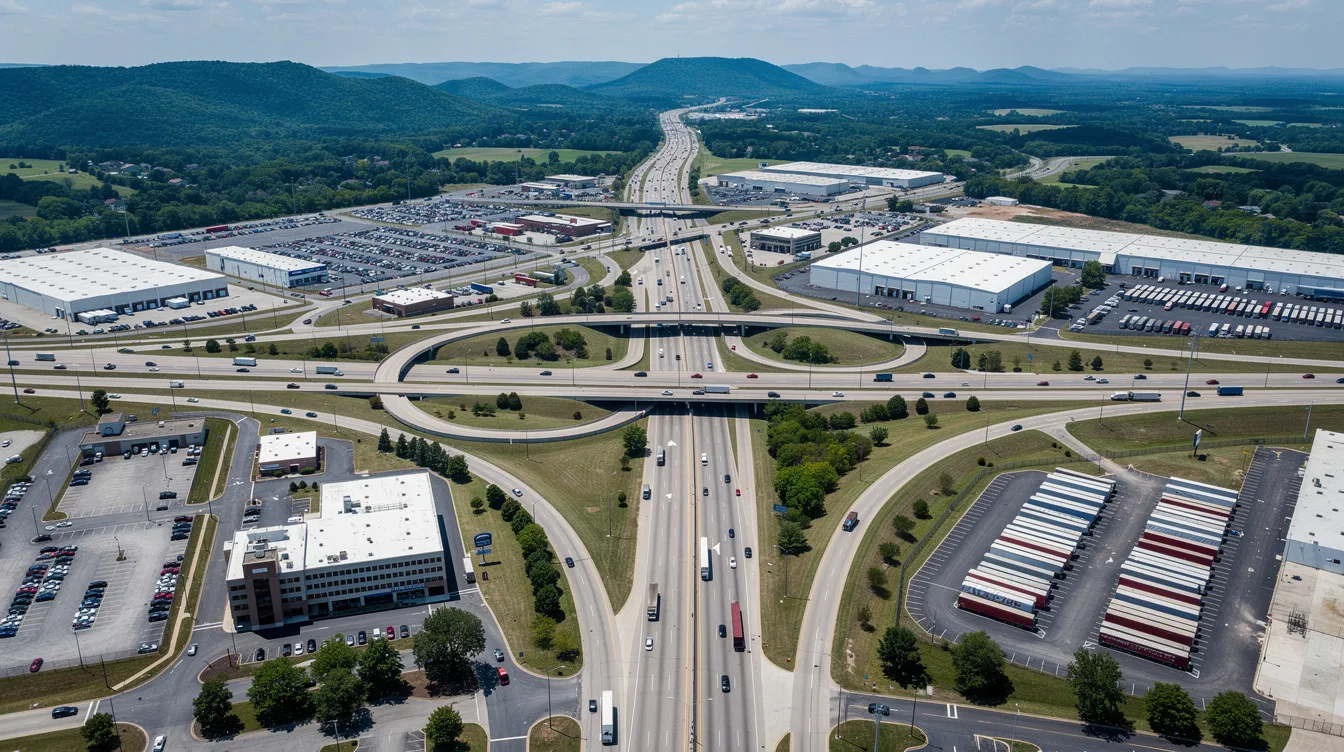
Middle Tennessee’s commercial construction market is expanding due to population growth, and Nashville’s population growth pressures commercial real estate supply. Healthcare construction is expanding in Tennessee’s Nashville area, with ambulatory care facilities expanding across the state. Healthcare construction is a leading nonresidential segment in Tennessee. Overlapping healthcare, office, industrial, and potential data center projects draw from the same subcontractor and supplier base, making Middle Tennessee the most likely near-term hotspot.
Industrial construction is strong in Rutherford and Wilson counties, driven by logistics and advanced manufacturing. East Tennessee, particularly the Knoxville and Oak Ridge corridor, may see heightened mission-critical and industrial demand that interacts with national data center growth, especially for electrical and mechanical trades. Chattanooga and the I-24/I-75 corridors remain important for logistics and manufacturing facilities, so any major data center or AI infrastructure commitments there would quickly influence labor availability and commercial construction project scheduling.
Leaders should pair national market intelligence with their own bid logs, owner conversations, and supplier feedback to identify which counties deserve the closest attention over the next few quarters.
A 30- to 90-Day Playbook for Tennessee Contractors Responding to Data Center Spending Signals
Leadership teams should take these specific actions within the next quarter:
- Review current exposure. Audit active bids, awarded-but-unbought projects, and existing backlog that shares labor or suppliers with likely data center and mission-critical work.
- Map your people. Identify where electricians, HVAC technicians, controls specialists, and senior superintendents are currently allocated. Set explicit limits on how many mission-critical projects they can support at once.
- Revisit estimating assumptions. Preconstruction teams should update labor productivity, escalation, and lead times for high-value electrical and mechanical components. Adjust bid strategies where data shows cost drift.
- Update go/no-go criteria. Reflect current nonresidential spending trends, labor pressure, and Tennessee utility-cost rules in your pursuit filters for commercial construction projects and mission-critical work.
- Protect core relationships. Schedule conversations with existing clients in healthcare, education, industrial, and institutional markets to confirm upcoming project timelines. Contractors should align hiring plans with reliable backlog parts, not speculative new starts alone.
How ABC Greater Tennessee Supports Contractors Navigating Nonresidential Spending and Data Center Demand
ABC Greater Tennessee provides market intelligence that helps merit shop firms interpret spending data and turn it into action. The chapter’s Tennessee construction market intelligence resources help leaders separate national signals from local, executable opportunities.
ABC Greater Tennessee offers workforce development programs for contractors through the Construction Trades Academy, which helps build capacity for Tennessee contractors in electrical, HVAC, plumbing, and industrial maintenance, the exact roles central to mission-critical and data center work. Safety and operations resources, including guidance on construction safety and data centers, STEP, and OSHA training, help keep stacked schedules and complex MEP environments under control. Management education, leadership development, and events strengthen estimating discipline, supervision capacity, and portfolio-level decision-making.
Connect with ABC Greater Tennessee for updates, training, and strategic conversations on balancing data center opportunities with sustainable, safe, and profitable growth.
Next Steps: Turning Nonresidential Spending Signals into Action
Sustained data center demand is reshaping nonresidential construction spending, and Tennessee contractors must navigate it with care. Leaders should focus on backlog quality, labor allocation, procurement timing, and Tennessee utility-cost assumptions rather than chasing every mission-critical headline.
This week, convene a leadership huddle to review your data center and mission-critical exposure, update go/no-go criteria, and flag projects where electrical or mechanical procurement assumptions now look thin. Then connect with ABC Greater Tennessee to explore market intelligence resources, workforce development programs, or membership that keeps your firm positioned ahead of these spending shifts.
FAQ: Nonresidential Construction Spending Tennessee and Data Centers
These questions address common concerns for Tennessee contractors processing the latest nonresidential spending and data center trends.
Does rising national nonresidential spending guarantee more awarded data center work in Tennessee?
No. Stronger national spending and data center demand signal opportunity, but local permitting, site-readiness, utility coordination, and owner financing decisions still determine which projects break ground in Nashville, Knoxville, Chattanooga, or the Tri-Cities. Use national data as valuable context, but rely on direct owner conversations, regional bid calendars, and supplier feedback for near-term forecasting.
Which Tennessee firms should pay closest attention to data center and mission-critical trends?
Electrical contractors, mechanical and HVAC firms, civil/site and structural contractors, low-voltage and controls specialists, commissioning providers, and safety consulting teams are most directly exposed. General contractors and construction managers with strong healthcare, industrial, or technology portfolios should also monitor trends closely, because their core commercial projects compete for the same labor and equipment.
How should contractors factor Tennessee’s utility-infrastructure rules into bids?
Do not assume that local electric utilities will absorb major infrastructure costs to serve data centers. Clarify in writing which party pays for substation upgrades, lines, and related work. Include clear contract language on allowances, contingencies, and change-order treatment if power-delivery scope, tariffs, or timelines shift during the project. Involve legal counsel and experienced preconstruction staff when drafting or reviewing mission-critical contracts that depend heavily on new electrical infrastructure.
Are non-data-center commercial construction projects still attractive in this environment?
Many healthcare, institutional, industrial, and infrastructure projects in Tennessee remain strong opportunities, provided firms price them with realistic labor, procurement, and schedule assumptions. Some contractors may intentionally prioritize long-term client relationships and repeat commercial work over aggressive data center pursuits, to protect portfolio balance and execution quality. Data center demand is one powerful market signal among many, not the sole driver of strategy.
What is one practical step a Tennessee contractor can take this month?
Perform a focused internal review of the top 10 to 15 projects that rely most heavily on electrical and mechanical scopes. Rank them by risk and by potential interaction with regional data center and mission-critical demand. Then adjust your staff allocation, procurement schedule, and bid pipeline based on that review, and connect with ABC Greater Tennessee to align training, workforce development, or membership engagement with your updated strategy.