

Key Takeaways
- Tennessee construction safety improves when contractors pair strong supervision with proactive tools that help crews report hazards, track corrective actions, and spot patterns before injuries occur.
- OSHA recommends using leading indicators and lagging indicators together. For contractors, that means measuring items such as near-miss reporting, hazard-response time, training completion, and field observations alongside incident rates.
- Mobile reporting, connected sensors, and analytics can support faster jobsite decisions, but they work best when superintendents and safety leaders have a clear response process.
- ABC Greater Tennessee members can use the STEP safety benchmarking program and the chapter’s Safety Programs resources to build a more proactive safety system.
- A practical starting point is one pilot on one Tennessee project focused on one hazard category, one leading indicator, and one response workflow.
Why Proactive Safety Technology Matters for Tennessee Contractors
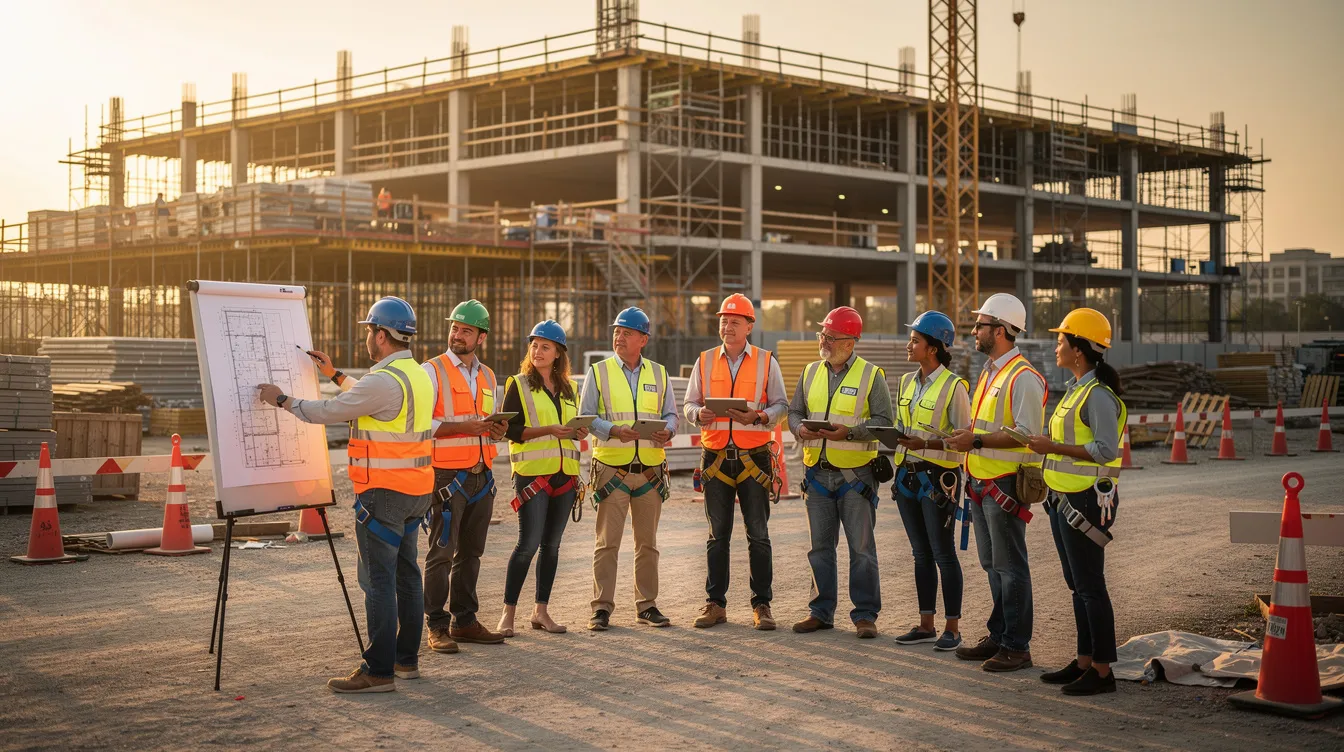
Tennessee construction safety leaders do not need more after-the-fact reporting. They need better visibility into hazards while work is still moving. That is the real value of proactive safety technology on commercial and industrial jobsites across Middle and East Tennessee.
Traditional safety metrics still matter. Recordables, lost-time cases, EMR, and similar measures help companies understand outcomes and benchmark performance. But those are lagging indicators. They show what already happened. OSHA encourages employers to use leading indicators as proactive, preventive measures and to pair them with lagging indicators when evaluating safety and health programs.
For Tennessee contractors, that shift is practical, not theoretical. A foreman who reports a recurring access issue through a mobile app, a superintendent who sees near-miss trends by work area, or a safety manager who tracks whether corrective actions are closing on time is using information early enough to change what happens next on the jobsite.

What Proactive Safety Technology Actually Means
Proactive safety technology is not one product. It is a way of using tools, data, and field routines to identify risk before an incident occurs.
In practice, that often includes:
- mobile hazard and near-miss reporting
- digital pre-task plans or job safety analyses
- dashboards that track response time and corrective actions
- connected devices or sensors that warn about changing conditions
- analytics that help safety leaders spot repeated exposure patterns
The difference between lagging and leading indicators is central to this approach:
| Indicator Type | What It Measures | When It Helps |
|---|---|---|
| Lagging indicators | Recordables, lost-time cases, claims, incident totals | After an event has already happened |
| Leading indicators | Near-miss reports, safety observations, training completion, response time, corrective-action closure | Before an event, while work conditions can still be changed |
OSHA’s guidance is useful here: a good safety and health program uses leading indicators to drive change and lagging indicators to measure effectiveness. That makes proactive technology valuable only if it supports a real field decision, not just another dashboard.
Where the Biggest Jobsite Value Often Appears First
On many Tennessee projects, the first gains from proactive safety technology come from basic speed and visibility rather than from advanced automation. If a crew member can document an unprotected opening, blocked access point, or repeated housekeeping issue in the field and route it immediately to someone who can act, the contractor reduces the delay between hazard recognition and correction.
That matters on fast-moving jobs where conditions shift by the hour. It also matters on larger or more complex sites where multiple trades, deliveries, temporary access changes, and overlapping work create more chances for miscommunication.
Instead of claiming Tennessee-specific enforcement trends that may vary by project and timing, the safer takeaway is broader: construction work regularly exposes crews to high-risk conditions, and the earlier a contractor can identify and correct hazards, the stronger the safety system becomes.
Core Building Blocks of a Proactive Safety System
Tennessee contractors can build a more proactive approach around four connected elements.
1. Leading indicators used every week. OSHA lists examples such as worker participation, hazards and near misses reported, time taken to respond to reports, management walkthroughs, training completion, and timely completion of corrective actions. Those are useful because they are measurable and can be reviewed before an injury occurs.
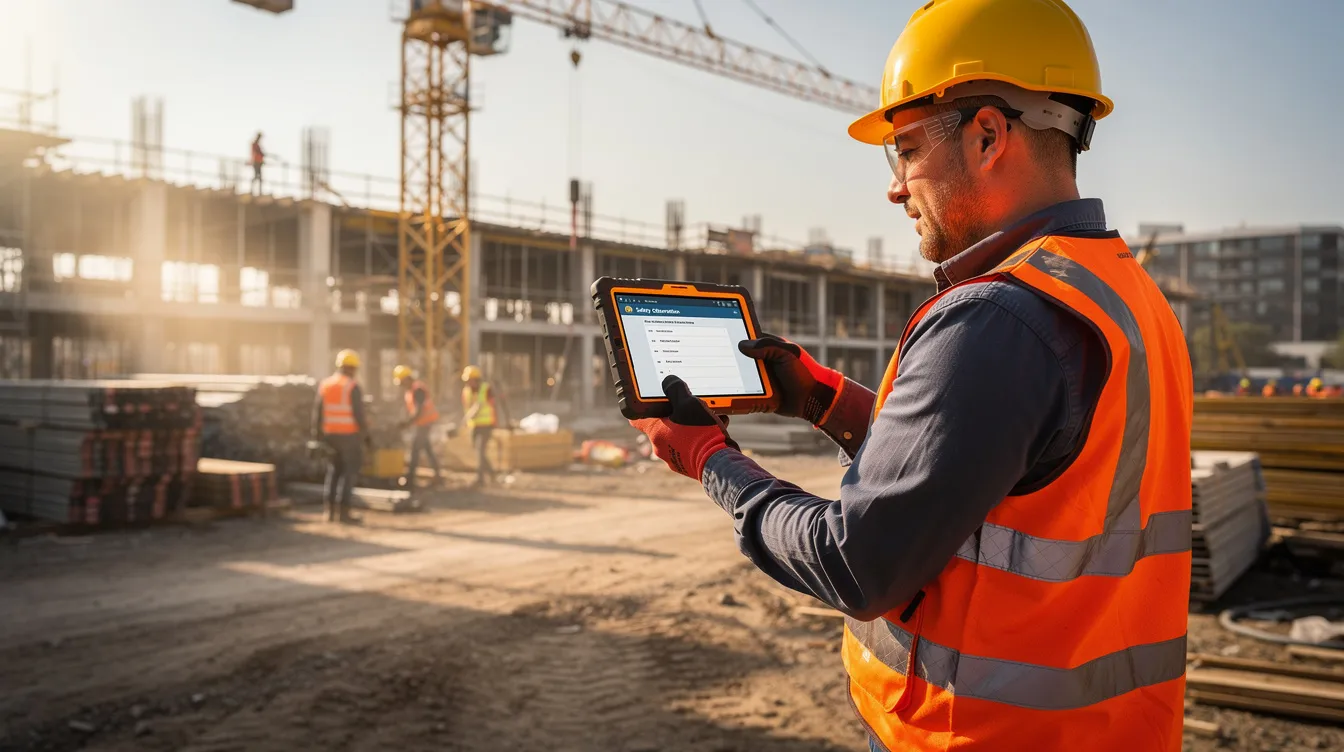
2. Mobile reporting from the field. Digital reporting tools give workers, foremen, and superintendents a faster way to document hazards, attach photos, and notify the right people. OSHA’s VPP mobile-workforce materials emphasize having a reporting system and collecting data from injuries, illnesses, near misses, inspections, and self-audits.
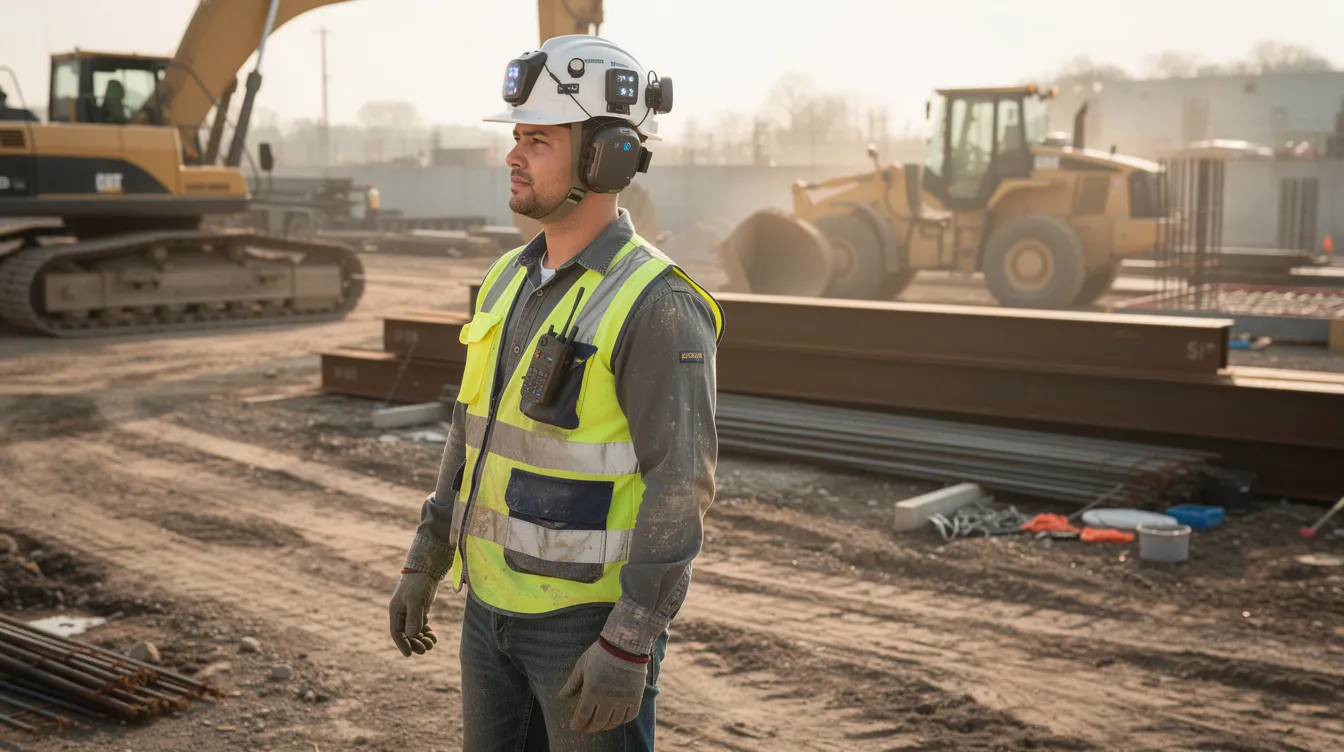
3. Connected sensors or wearable support tools where the hazard justifies them. Construction wearables can include proximity alerts, physiological monitors that may help identify heat-stress risk, and environmental sensors. These tools make the most sense when they are matched to a defined exposure, such as equipment interaction, heat, or changing air conditions, rather than adopted as generic tech upgrades.
4. Analysis tied to action. Analytics should highlight patterns that deserve intervention. If certain areas generate repeat near misses, if one trade consistently closes corrective actions slowly, or if one recurring condition appears in field observations, leaders can respond with a targeted change in planning, sequencing, supervision, or training.
Using Leading Indicators to Strengthen Tennessee Construction Safety
Leading indicators are one of the clearest ways to make Tennessee construction safety more proactive. OSHA says they are proactive and preventive measures that can reveal potential problems in a safety and health program and help employers improve performance.
For contractors, the most useful leading indicators are usually the ones supervisors can actually influence. Examples include:
- number of jobsite safety observations completed each week
- number of hazards or near misses reported
- time taken to respond to reports
- percentage of corrective actions closed on time
- number of workers who completed required safety training
- frequency of management walkthroughs
These measures are especially helpful for smaller and mid-sized contractors because a low incident count by itself may not tell the full story. A company can go months without a recordable injury and still have unresolved exposures building in the field. Leading indicators give leaders a way to see whether the process itself is working.
ABC’s STEP Health and Safety Management System is relevant here because it gives contractors a structured framework for measuring safety data and benchmarking with peers. ABC’s 2026 reporting also says participating companies can use STEP to improve performance through core leading indicators and continuous evaluation. Rather than repeat conflicting versions of the “safer than industry average” statistic, this article is better served by a broader point: STEP gives firms a disciplined system for measuring what they do before something goes wrong.
| Leading Indicator | Technology Pairing |
|---|---|
| Pre-task plans completed before high-risk work | Mobile planning forms or digital JSAs |
| Near-miss and hazard reports submitted from the field | Mobile reporting platform with photo capture |
| Time from hazard report to correction | Dashboard or workflow tracker |
| Training completion by crew or trade | Digital training records or LMS reminders |
| Leadership safety walks documented weekly | Mobile observation tool |
Real-Time Data on the Job: Mobile Reporting, Sensors, and Wearables
Real-time data matters because it changes decisions during the shift, not after it.
Consider a simple example. A worker spots a floor opening, damaged access point, or other unsafe condition, takes a photo, and submits it through a field-reporting tool. The superintendent or safety lead receives that alert quickly, assigns corrective action, and verifies closure before another crew moves into the area. The technology did not create the safety culture, but it shortened the time between observation and response.
Wearables and sensors can support the same goal when matched to real hazards. NIOSH has described construction wearable technologies such as proximity-detection systems for moving equipment, physiological status monitors that may warn about potential heat stress, environmental sensors, and exoskeletons that may reduce mechanical stress during manual work. In Tennessee conditions, the most practical uses often involve equipment interaction, heat, and broad site visibility.
These tools should support, not replace, core responsibilities such as supervision, hazard recognition, required PPE, and site-specific planning. A sensor alert means little if no one owns the response.
Where Analytics and AI Fit Into Jobsite Safety
Analytics become useful when they help contractors see patterns across many observations, reports, or alerts. In a proactive safety system, that can mean identifying repeated housekeeping problems in one work zone, recurring delays in closing corrective actions, or clusters of near misses around a certain activity.
Artificial intelligence may support that work by sorting large volumes of photos, text entries, or sensor data more quickly than manual review alone. But the value standard should stay simple: does it help the project team respond faster or more accurately?
That is also where caution matters. Contractors should avoid overpromising what AI can do. Data quality depends on accurate field reporting, consistent categories, and clear review habits. Better inputs and better governance usually matter more than brand names or software hype.
Privacy also deserves attention, especially if a tool involves location tracking or physiological data. Contractors should set clear internal expectations about what information is collected, who can access it, and how it will be used.
How to Pilot Proactive Safety Technology on One Tennessee Project
The strongest first move is usually not a companywide rollout. It is a focused pilot tied to one project, one hazard category, and one measurable process.
- Choose one representative project. Pick a project where leadership is engaged, and the exposure is real enough to test.
- Define one hazard cluster. Falls, struck-by exposure, heat, housekeeping, or access control are all more manageable than trying to solve everything at once.
- Select one leading indicator. For example: number of near misses reported, time to corrective action, or percentage of high-risk tasks that begin with a completed pre-task plan.
- Match one tool to that indicator. Use mobile reporting, digital JSAs, a simple alert workflow, or another tool that directly supports the target behavior.
- Assign response ownership. Decide who receives alerts, how quickly they review them, and how they will document closure.
- Run the pilot for a set period. Four to six weeks is often enough to see whether the workflow is being used and whether it improves visibility.
- Review outcomes honestly. Did reporting improve? Did response time improve? Did the tool create useful action or just more administration?
- Scale only what worked. Expand the process only after the pilot proves it supports safer decisions in the field.
This pilot structure also helps contractors avoid the common mistake of buying multiple safety technologies before they know which jobsite problem they are trying to solve.
Common Implementation Mistakes to Avoid
- Buying tools before defining the decision. If a contractor cannot say which hazard, indicator, or workflow the tool supports, the rollout is likely to create noise.
- Adding technology without supervisor buy-in. Field adoption usually depends on superintendents and foremen understanding how the tool helps them act faster, not just how to fill out another form.
- Ignoring trust and privacy questions. Wearables and tracking tools can create resistance if leaders don’t clearly explain what is being collected and why.
- Letting corrective actions stall. Reporting systems only add value if someone is accountable for response and closure.
- Neglecting basic safety discipline. Technology can strengthen planning and visibility, but it does not replace competent supervision, housekeeping, PPE, training, or compliance with applicable OSHA requirements.
How This Connects to ABC Greater Tennessee Resources
For ABC Greater Tennessee members, the best fit for this topic is the chapter’s construction safety cluster. The strongest next step is usually to connect proactive safety technology to an existing safety-management system, rather than treating it as a standalone purchase.
Contractors can start with ABC Greater Tennessee’s Safety Programs page for training and broader support, then review the chapter’s existing guidance on construction safety technology, construction wearables, and AI in construction where those subjects match the company’s needs.
If your team wants one practical next step, choose one active project, identify one recurring hazard or exposure, and set up one leading indicator with one clear response workflow. That is a manageable way to make Tennessee construction safety more proactive without turning technology into a distraction.
Frequently Asked Questions
Below are answers to common questions about this topic.
How is proactive safety different from traditional construction safety programs?
Traditional programs often emphasize lagging outcomes such as recordable injuries and lost-time cases. Proactive safety adds leading indicators, faster field reporting, and earlier intervention so contractors can address hazards before incidents occur.
Do small Tennessee contractors need advanced safety technology?
Not necessarily. Many firms can start with simple mobile reporting, digital checklists, or clearer corrective-action tracking. The best first tool is the one that helps the company respond faster to a real recurring hazard.
How should a contractor choose its first leading indicator?
Start with something tied to a known jobsite problem and a clear response. Good early examples include near-miss reporting volume, time to corrective action, or completion of pre-task plans before high-risk work.
Can wearables replace supervision or PPE requirements?
No. Wearables can support hazard awareness and faster alerts, but they do not replace competent supervision, required PPE, training, or compliance obligations.
What is the best first step after reading this article?
Pick one project, one hazard category, and one measurable leading indicator. Then test one reporting or response workflow for a short pilot before you invest in a broader rollout.