

VR in construction is moving upstream. For Tennessee contractors, that matters because virtual reality is no longer limited to polished walkthroughs or occasional safety demos. It is increasingly being used before the build to evaluate construction technology products, test layouts at full scale, and catch practical issues before teams commit to a prototype, purchase, or field rollout.
Key Takeaways
- VR in construction is increasingly useful before field deployment. The clearest current example is product development: Construction Executive reported on October 22, 2026, that Milwaukee Tool is using virtual reality to evaluate ideas, identify challenges, and make decisions before building physical prototypes.
- For contractors, VR is best treated as an evaluation tool, not a magic solution. It can help teams review ergonomics, layout, access, visibility, and constructability questions earlier, but it does not replace physical prototypes, field testing, or standard coordination processes.
- Tennessee firms do not need to build a VR lab to benefit. Contractors in Nashville, Knoxville, Chattanooga, and the Tri-Cities can start by joining vendor-led or design-led virtual reviews tied to one high-risk product or one coordination-heavy space.
- VR should fit into a broader digital strategy. It complements BIM, prefabrication planning, and other digital construction tools rather than replacing them.
- The practical goal is better early decisions. This article explains where VR in construction is most useful, where it may be unnecessary, and how to run a limited pilot without overcommitting.
Why VR in Construction Is Moving Upstream
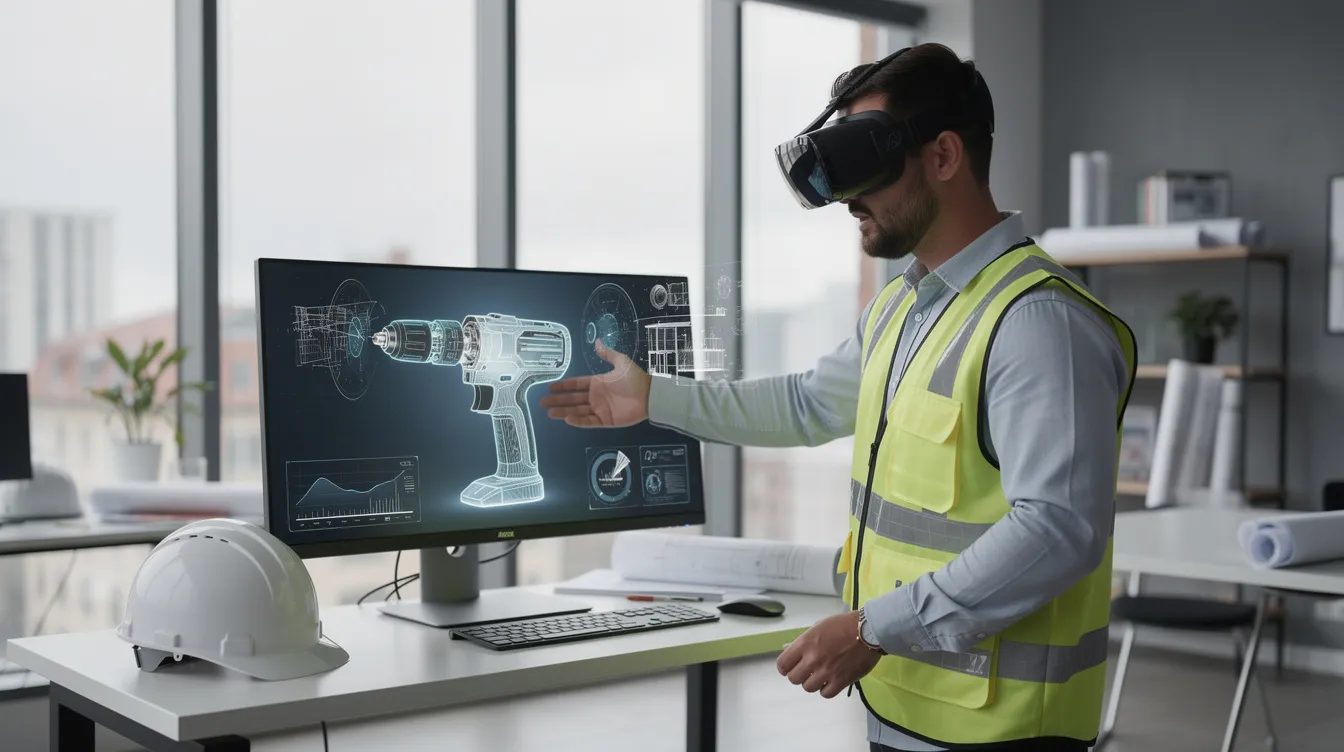
Many construction professionals first encountered VR through training modules or client-facing building walkthroughs. That is still part of the picture, but the more interesting shift is happening earlier. Construction Executive reported in October 2026 that Milwaukee Tool now uses virtual reality during product development so teams can evaluate ideas, identify potential challenges, and make informed decisions before building physical prototypes.
That is an important distinction. In this article, VR in construction means immersive headsets and virtual environments used to review construction tools, equipment, interfaces, and coordination scenarios before a product rollout or before work begins in the field. VR doesn’t automatically improve every project. The value is that it can give teams another way to test assumptions before money and schedule are tied to a physical outcome.
For Tennessee contractors, that can matter when evaluating new field technology, coordination-heavy layouts, prefabrication details, or equipment choices that will affect crews on active jobsites across Middle and East Tennessee.
What VR Actually Helps Teams Review
At its best, VR lets a team experience a design or product at a scale closer to the jobsite than a desktop screen allows. That can be useful when the question is practical: Can a user reach the controls comfortably? Is a screen readable from the likely standing position? Does a maintenance path feel workable? Does a layout appear serviceable once trades are placed in the same space?
Typical review categories include:
- Ergonomics and human factors: reach, grip position, body movement, visibility, and use while wearing work gear.
- Control layout and interface review: whether buttons, screens, or user prompts appear logical in realistic working positions.
- Clearance and access: whether workers appear able to move, maintain, or install around surrounding equipment and structure.
- System fit: how a product, assembly, or layout may interact with trailers, racks, access routes, or other project conditions.
Those are review questions, not guaranteed outcomes. VR can help teams spot issues earlier, but it still needs to be backed up by physical testing, field verification, and ordinary coordination discipline.
That limitation matters. Even in the Milwaukee Tool example highlighted by Construction Executive, VR is part of the development process, not the final proof by itself. Contractors should approach VR the same way: as a tool for earlier evaluation, not as a substitute for real-world validation.
Where VR in Construction Can Be Useful for Tennessee Contractors
Most ABC Greater Tennessee members don’t design power tools in-house. But they can still benefit from the same pre-build logic. The main opportunity is to use VR when a decision would be expensive or disruptive to correct later.
Useful examples may include:
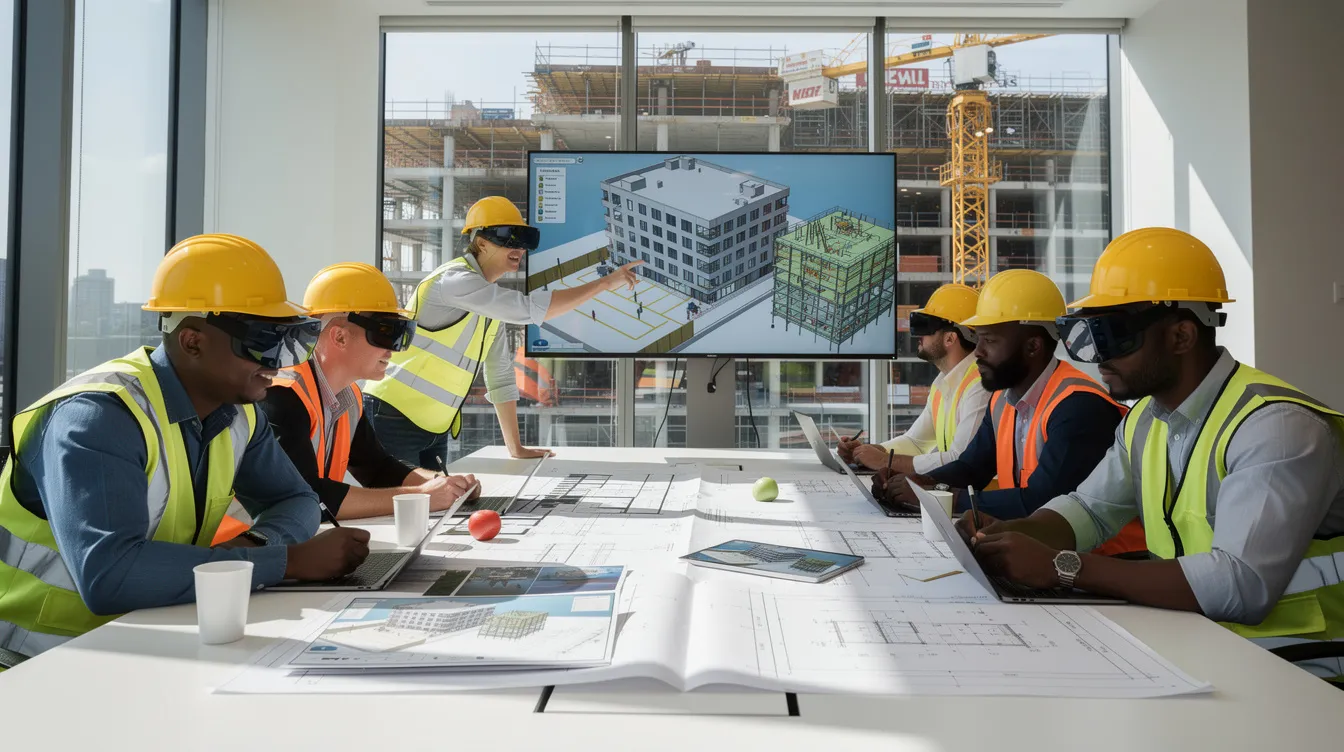
- Coordination-heavy mechanical or electrical spaces: using immersive review to examine service clearance, access paths, and maintenance reach in a congested room before installation.
- Prefabrication planning: reviewing a rack, skid, or panelized assembly at full scale before fabrication is too far along to revise efficiently.
- New tool or equipment evaluation: participating in a manufacturer or vendor review to understand how a device may fit the way crews actually work.
- Trailer or field-interface setup: testing how crews may interact with kiosks, screens, or digital workflows before broad rollout.
That is where local relevance matters. Contractors working on healthcare, industrial, or other tight-tolerance projects around Nashville, Knoxville, Chattanooga, Kingsport, Johnson City, and Bristol often deal with spaces where scale, reach, and access are hard to judge from plan sheets alone. VR will not be necessary on every job, but it can be worth considering where the review question is spatial and human, not just geometric.
VR vs. BIM, Augmented Reality, and Mixed Reality
Contractors already using BIM, tablets, or field visualization tools should not think of VR as a replacement for those systems. It is better understood as one piece of a broader digital workflow.
BIM remains the backbone for model-based coordination, documentation, and clash review. Augmented reality is often more useful when the goal is to compare digital information against existing field conditions. Mixed reality can be helpful when real and digital elements need to be viewed together during installation or retrofit work.
VR is most distinct when the team wants full immersion away from the active site to review scale, interaction, workflow, or a product still being refined. That makes it especially relevant before fabrication, before procurement, or before a major field rollout.
ABC National has previously discussed virtual mockup review in the context of virtual design and construction coordination. That narrower idea is useful here: VR is often most valuable when it helps teams review a design or space more realistically before installation, not when it is treated as a standalone gadget.
How VR Supports Constructability and Prefabrication Review
One of the most practical uses of VR in construction is constructability review before crews mobilize. Instead of relying only on screenshots, markups, or conference-room discussion, teams can step into a full-scale environment and react to the space more naturally.
For example, a project team can review whether there appears to be enough room to access valves, open panels, swing tools, or move through a coordination-heavy area safely and efficiently. A prefabrication team can use the same approach to review lifting access, connection points, or installation sequence assumptions before fabrication decisions become difficult to unwind.
That does not mean VR proves that every issue has been solved. It means it can help reveal questions earlier. For contractors already working through broader technology planning, that is the right frame: use VR where it improves early decision quality, then carry those decisions back into the model, the schedule, and field documentation.
When VR Is Worth Testing and When It Probably Is Not
Evaluate VR in construction the same way you evaluate any other technology investment: by fit, risk, and likely usefulness.
VR is more likely to be worth testing when:
- a product, layout, or workflow is new enough that teams still have meaningful choices to make;
- the issue depends heavily on full-scale spatial understanding, access, or human interaction;
- the project involves tight tolerances, heavy coordination, or prefabrication; or
- a late correction would be unusually disruptive.
VR is less likely to be worth the effort when:
- the detail is simple and already well understood;
- the team lacks a usable 3D model or accurate digital information to review;
- the decision can be made just as well through ordinary model coordination; or
- the review question is not really spatial in the first place.
That is an important editorial line for Tennessee contractors. VR may be useful, but it is not automatically the right answer. Sometimes a standard BIM review, field mockup, or vendor demo will do the job more efficiently.
How to Pilot VR on One Project or Product
The lowest-risk starting point is not a companywide rollout. It is one defined use case with one decision the team genuinely needs to make.
A practical pilot can follow four steps:
- Choose a narrow review target. Examples might include one mechanical room, one prefab assembly, one layout comparison, or one technology interface under consideration.
- Decide what question the pilot needs to answer. For example: Does this layout appear maintainable? Does this product interface make sense for field use? Are there access concerns we should resolve before fabrication or purchase?
- Bring in the right reviewers. Include the people who will actually use, install, maintain, or supervise the work.
- Document what changed. Capture comments, decisions, and any resulting revisions so the pilot produces something more useful than a one-time demo.
If you want to measure the pilot, frame results as review metrics rather than promised outcomes. Examples include how many issues were identified for follow-up, whether the pilot changed a purchase or layout decision, and whether field leaders found the review clearer than a screen-based meeting alone.
That measured approach pairs well with ABC Greater Tennessee’s broader guidance on stress-testing new technology before expanding its use.
Questions to Ask Vendors Before You Invest in VR
If a contractor is considering VR support from a manufacturer, designer, or software provider, the best early step is to ask practical workflow questions rather than focus only on the headset.
Start with questions such as:
- What model or file type is the VR environment built from?
- How closely does the VR review match the current design or product version?
- Who updates the environment when the design changes?
- How are comments captured and turned into action items?
- Can field supervisors and end users participate without extensive setup?
- What happens after the review: does it feed back into BIM, fabrication planning, or procurement decisions?
Those questions help separate useful evaluation workflows from a one-off demonstration. Contractors do not need the most advanced VR package on day one. They need a review process that supports better decisions.
How VR Fits a Merit Shop Technology Strategy
For merit shop contractors, the strongest case for VR is not trend-chasing. It is performance-based evaluation. If immersive review helps a company compare options more clearly, involve field voices earlier, and make a better decision before committing time or capital, that aligns with the broader merit shop emphasis on practical results and informed competition.
That also fits ABC Greater Tennessee’s mission. The chapter describes itself as serving the commercial construction industry by championing merit shop principles, empowering member growth, and promoting ethical, safe practices. In that context, VR belongs inside a larger conversation about how contractors evaluate tools, workflows, and digital systems carefully rather than adopting them for novelty alone.
For some firms, the next step may be a single vendor-led review. For others, it may be a larger push to connect immersive review with BIM, prefabrication, and a broader connected construction playbook. Either path is more useful than treating VR as a standalone trend piece.
Next Steps for Tennessee Contractors Considering VR in Construction
VR in construction is most useful when it is tied to a real pre-build decision. The technology is not valuable because it looks advanced. It becomes valuable when it helps a contractor, manufacturer, or design team review something earlier and more clearly than they otherwise could.
For contractors across Middle and East Tennessee, a sensible next move is straightforward:
- Identify one upcoming project condition or product decision where full-scale immersive review might clarify a real question.
- Ask a trusted manufacturer, designer, or technology provider whether they can support a focused VR review.
- Compare the usefulness of that review against your normal process before deciding whether VR deserves a larger role.
If your firm is evaluating where VR belongs in a broader technology strategy, ABC Greater Tennessee offers education, industry perspective, and member resources to help connect one pilot to a more disciplined digital roadmap.
FAQ: VR in Construction for Tennessee Contractors
Below are answers to common questions about this topic.
Is VR in construction only useful for large national firms?
No. Smaller and mid-sized contractors can still benefit if they approach VR through a focused use case. In many cases, the easiest path is to join a review hosted by a vendor, designer, or technology partner rather than build an internal system first.
Do we need BIM before we can use VR effectively?
Usually, a strong VR review depends on having a reliable 3D model or similarly accurate digital information. If the underlying model is weak, the VR experience may be less useful because the team is reviewing an unreliable representation.
Does VR replace physical mockups or field testing?
No. VR can support earlier review, but it does not eliminate the need for physical prototypes, ordinary field validation, or hands-on testing where those steps are still important.
What should we measure after a VR pilot?
Measure the pilot against the decision it was supposed to support. Useful questions include whether the review surfaced issues for follow-up, improved clarity for field leaders, or changed a design, layout, or purchasing decision before execution.
How should VR relate to our broader technology plan?
VR is most useful when it supports a broader workflow rather than standing alone. For many contractors, that means connecting immersive review to BIM, prefabrication planning, vendor evaluation, and the company’s normal process for testing technology before expanding it.