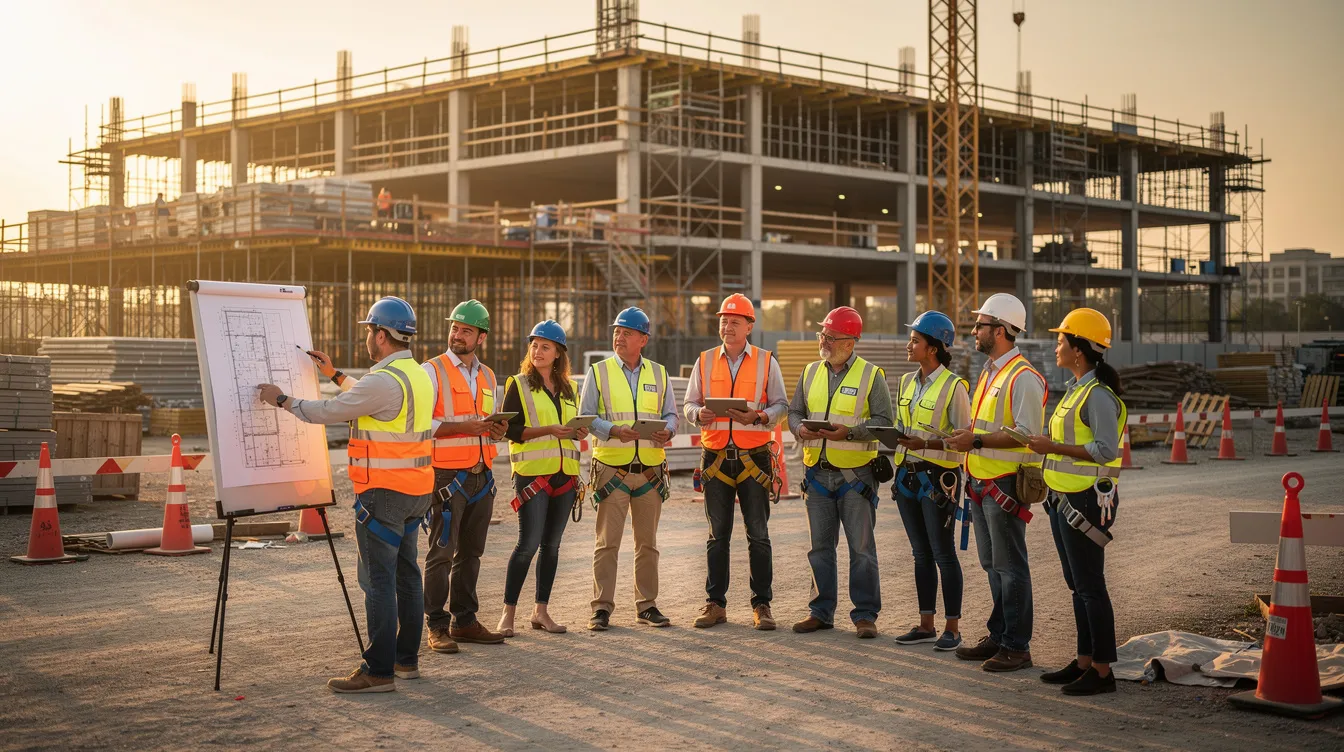


Key Takeaways
- Construction company culture is an operational issue, not a soft topic. It affects how people report hazards, how supervisors respond under pressure, and how consistently projects are delivered.
- A culture audit is more than an employee survey. It reviews day-to-day behaviors, leadership habits, communication patterns, and the gap between written policy and field reality.
- OSHA’s emphasis on management leadership and worker participation gives Tennessee contractors a practical framework for reviewing culture through a safety and risk lens.
- For contractors in Middle and East Tennessee, the most useful audit questions usually show up in three places: the office, the jobsite, and front-line supervision.
- This article outlines warning signs, audit questions, and next steps that commercial and industrial contractors can use to start a practical review.
Why Construction Company Culture Has Become a Business Risk
Construction leaders routinely scrutinize backlog, margins, schedule risk, and safety performance. But as Construction Executive recently argued in its discussion of culture audits, many companies still inspect their financial condition more closely than the behaviors and assumptions shaping daily decisions. That blind spot matters because construction company culture influences what crews report, what supervisors tolerate, how problems escalate, and whether lessons actually travel from one project to the next.
For Tennessee contractors managing work in markets such as Nashville, Knoxville, Chattanooga, and the Tri-Cities, culture problems often appear first as familiar operating friction. A crew may stop reporting near misses because nothing seems to change. A superintendent may feel pressure to push production even as site conditions deteriorate. Office and field teams may think they agree on priorities until a job starts slipping and the gap becomes obvious. None of those issues are abstract. They affect safety, retention, rework, coordination, and client confidence.
That is why culture deserves to be treated as a measurable operating risk. In this context, culture isn’t slogans on a wall or broad statements about values. It means the shared habits and expectations that shape how work is really planned, discussed, corrected, and carried out when schedules tighten.
What an Organizational Culture Audit in Construction Actually Is
A culture audit is a structured review of how people actually work together across the company. It looks beyond whether employees say they are satisfied and asks harder questions: How do leaders respond to bad news? Do workers believe they can raise concerns without backlash? Do project teams follow the same expectations from one job to another? Are supervisors reinforcing the same standards the company claims to value?
In a construction setting, that means using multiple sources of information. Surveys and interviews can help, but they should be paired with practical evidence such as jobsite observations, incident reviews, turnover patterns, training follow-through, project closeout feedback, and examples of how corrective actions were handled.
The goal is not to label a company as “good” or “bad.” It is to identify where the organization is consistent, where it is drifting, and where hidden risk may be building under normal project pressure.
The main dimensions a construction culture audit should typically cover include:
- Leadership behavior and consistency
- Worker participation in safety and quality discussions
- Communication and escalation between field and office
- Accountability and follow-through on corrective actions
- Learning after incidents, mistakes, and near misses
- Alignment between written expectations and actual field practice
For merit shop contractors, the audit can also examine whether day-to-day operations reflect the company’s stated commitments to ethical conduct, open communication, accountability, and performance.
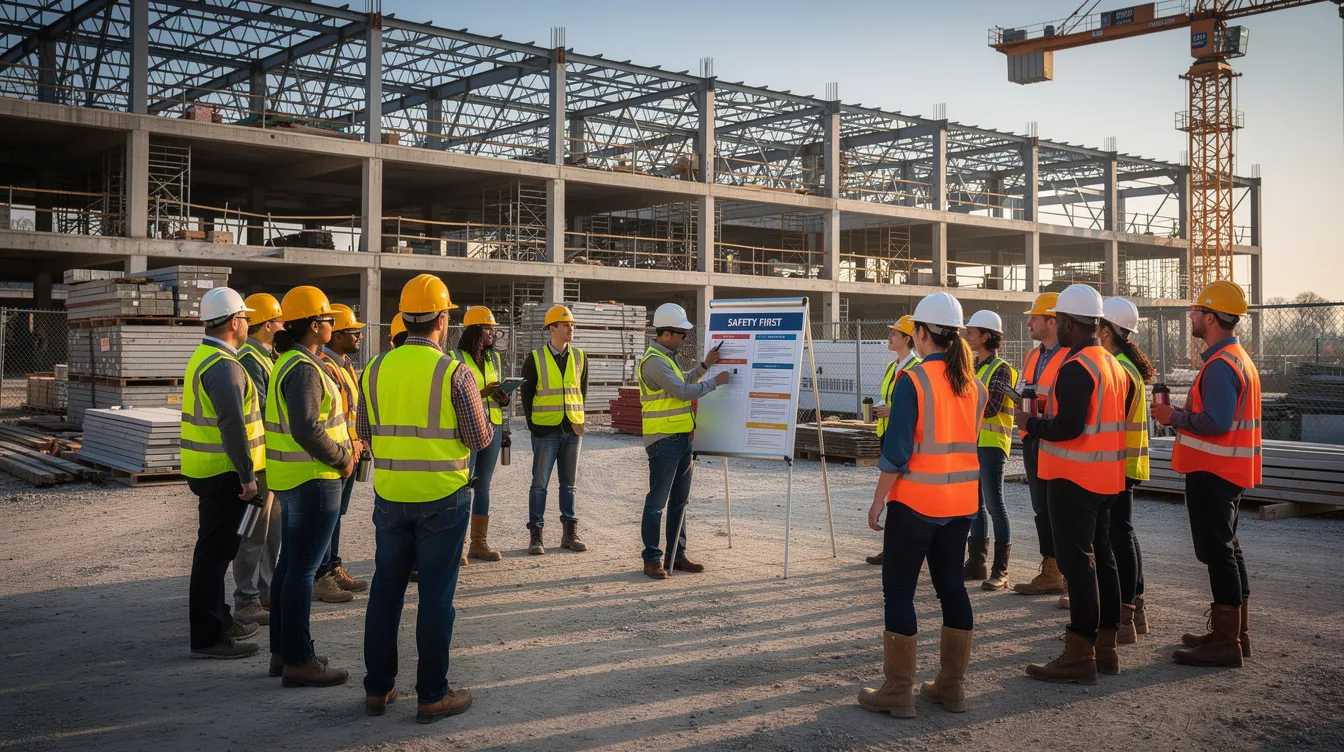
OSHA’s Lens: Management Leadership and Worker Participation
One of the clearest ways to structure a culture audit is to use OSHA’s recommended practices for construction safety and health programs. OSHA places management leadership and worker participation at the center of an effective program, and both are fundamentally culture issues.
Management leadership means more than approving a policy. It means leaders set expectations, commit resources, follow through, and model what matters. In practical terms, crews notice whether leaders talk about safety and quality with the same seriousness as schedule and production. They also notice whether concerns raised in the field receive a real response or disappear once the meeting ends.
Worker participation means workers are involved in establishing, operating, evaluating, and improving the safety and health program. OSHA also says workers should not experience retaliation when they raise concerns, report injuries or hazards, or exercise safety and health rights, and it recommends giving workers a way to report concerns anonymously to reduce fear of reprisal. That makes worker voice a direct culture issue, not just a compliance issue.
For contractors, this creates a practical audit backbone: Do leadership actions match the stated message? Do workers believe speaking up is safe? Does the company close the loop after concerns are raised? If the answer is inconsistent, the culture audit has already surfaced useful risk.
ABC National’s STEP framework supports a similar discipline by encouraging contractors to measure performance, identify improvement opportunities, strengthen best practices, and build health and safety into company culture. That is a useful fit for Tennessee firms that want an audit process tied to ongoing operational improvement rather than a one-time exercise.
Where Culture Shows Up in the Office, on the Jobsite, and in Supervision
A strong culture audit should look in three places because culture often changes depending on where you stand.
In the office, review how decisions are made before problems reach the field. Are project teams given realistic resources? Do estimating, operations, safety, and leadership send the same message about priorities? Can accounting, HR, or administrative staff raise concerns about documentation, compliance, or conduct without feeling exposed?
On the jobsite, look at how crews actually engage with planning, hazard reporting, housekeeping, toolbox talks, and corrective actions. Are pre-task plans treated seriously or rushed? Are near misses documented and discussed? When workers raise an issue, do they see any visible follow-through? These details reveal whether the stated culture is alive in the field or sitting in a binder.
In supervision, examine how foremen and superintendents respond under pressure. Supervisors create the day-to-day environment on every project. If they coach, listen, correct, and escalate consistently, the culture usually strengthens. If they cut corners, punish bad news, or operate differently from one crew to another, culture becomes unstable no matter how strong the written program looks.
For contractors with work spread across Middle and East Tennessee, it is especially useful to sample more than one project. A company may look consistent at headquarters but vary widely between a Knoxville industrial site, a Nashville commercial build, and a Chattanooga health care project.
Warning Signs Your Construction Company Culture Needs an Audit
Most companies do not decide to review culture because they suddenly become curious about it. They do it because recurring signals suggest that something deeper is off. Common warning signs include:
Safety-related warning signs
- Similar incidents or recordables repeating across projects
- Near misses discussed informally but rarely documented
- Workers hesitating to stop work or question a plan
- Corrective actions that are assigned but not consistently closed out
Workforce and supervision warning signs
- New hires leaving quickly after onboarding
- Certain supervisors developing a reputation as “problem jobs”
- Difficulty promoting reliable leaders from within
- Exit feedback mentioning favoritism, poor communication, or fear of speaking up
Project-delivery warning signs
- Recurring rework on similar scopes
- Breakdowns between office and field expectations
- Client frustration tied more to communication and coordination than technical ability
- Problems that repeat because lessons learned never spread beyond one team
Any one of these signals may not prove a culture problem on its own. A pattern across multiple jobs, supervisors, or departments usually does.
How Culture Connects to Safety, Retention, and Business Performance
Culture works like an invisible control system. It affects how people behave when leaders are not standing beside them, which is why it shapes more than morale. In construction, culture influences whether hazards are reported early, whether crews trust supervisors, whether project teams coordinate honestly, and whether mistakes become lessons or repeat themselves.
That connection is especially important for safety. OSHA’s recommended practices make clear that effective programs depend on leadership commitment and meaningful worker participation. If workers do not trust the reporting process, or if leaders do not act on what they hear, the technical parts of the safety program become less reliable.
Culture also affects retention and execution, even without turning the article into a broad HR discussion. A contractor with uneven supervision, poor escalation habits, or low trust will usually feel that strain in onboarding, leadership development, and project consistency. By contrast, companies that respond predictably, coach supervisors well, and follow through on field concerns often create more stable jobsites and fewer avoidable surprises.
That does not mean culture alone solves every business problem. It does mean leaders should stop treating it as separate from performance.
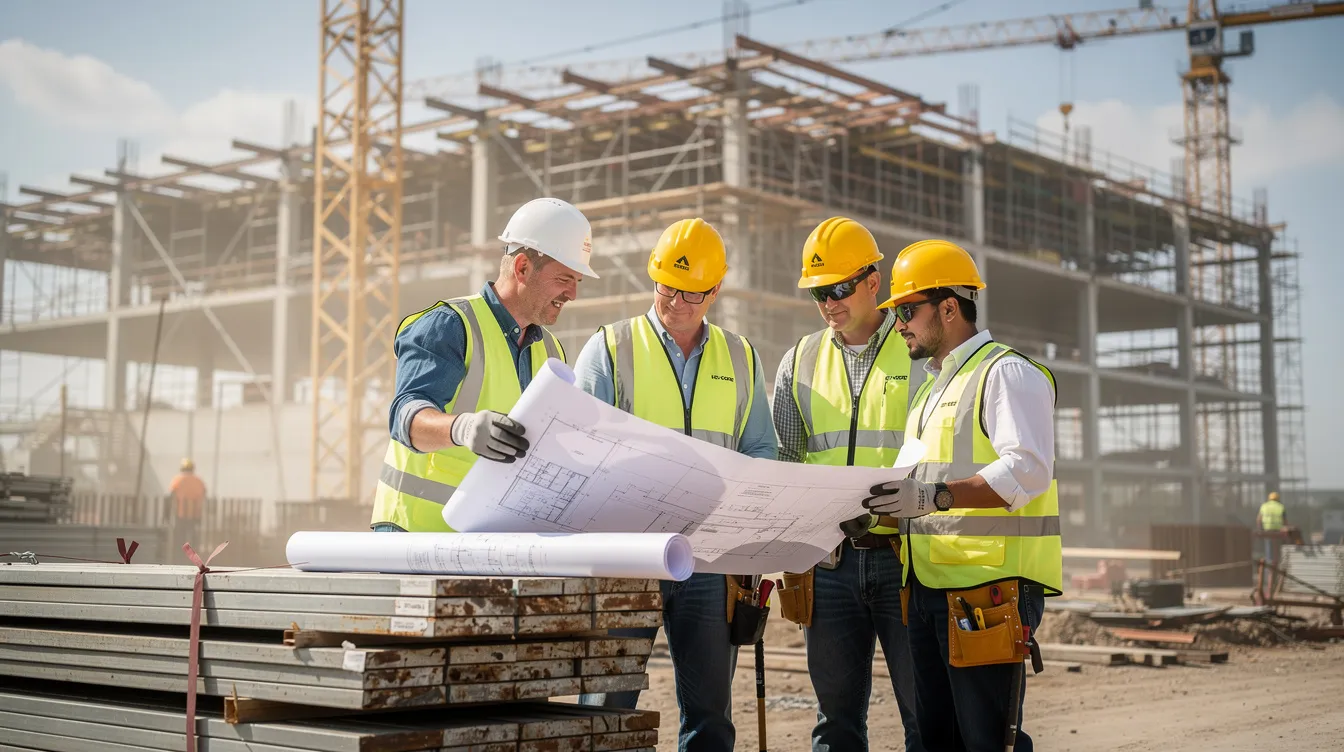
Designing a Practical Culture Audit for Tennessee Contractors
For most contractors, the best audit is not the most complicated one. It is the one the leadership team will actually complete, discuss honestly, and use to make changes. A practical process can look like this:
1. Define the scope. Start with a manageable focus. That might be safety culture across several representative projects, supervisor consistency across one division, or communication between office and field on active jobs.
2. Use a cross-functional team. Include leadership, operations, safety, and at least one trusted field voice. A culture review driven only from the office will miss too much.
3. Gather both hard and soft evidence. Review incident logs, near-miss reporting, training follow-through, turnover patterns, corrective-action records, project feedback, and direct jobsite observations. Pair that with interviews or listening sessions.
4. Organize findings around behavior. Instead of stopping at statements like “communication needs improvement,” ask what behavior is creating the problem. Is bad news delayed? Are expectations different from one supervisor to another? Are concerns raised but not resolved visibly?
5. Map the findings to leadership and worker participation. OSHA’s framework helps simplify what can otherwise become a vague discussion. Many culture issues come back to whether leaders act consistently and whether workers trust the system enough to participate.
This type of audit can work across a small contractor or a larger regional firm. The key is to keep it concrete.
A Simple Culture Audit Checklist for Construction Leaders
Use the checklist below as a starting point. It is not an industry standard or pass-fail scorecard. It is a practical screening tool for leadership discussion.
Leadership behavior
- Do executives and project leaders discuss safety, quality, and execution together rather than treating them as separate topics?
- When concerns are raised, do leaders respond visibly and consistently?
- Do company actions match stated values when schedules tighten?
Worker participation
- Are crews invited to contribute to hazard reviews, pre-task planning, and problem solving?
- Do workers know how to raise concerns, including anonymously if needed?
- Do employees see evidence that reporting leads to action?
Communication and trust
- Can bad news move upward without punishment for the messenger?
- Do office and field teams share the same understanding of project priorities?
- Are mistakes used for learning, not only blame?
Recognition and values
- Are supervisors recognized for coaching, accountability, and follow-through, not just production?
- Do day-to-day decisions reflect the company’s stated values?
- Are problem behaviors corrected even when the person involved is highly productive?
Learning and improvement
- Do incident reviews look beyond immediate technical causes to supervision, communication, or planning issues?
- Are lessons learned shared across projects and regions?
- Does the company revisit recurring issues until they actually improve?
If several areas consistently produce hesitant answers or obvious disagreement among leaders, that is usually a strong signal that a fuller audit is worth doing.

What to Do After the Audit
A culture audit only matters if leaders respond with specific action. Broad statements about improvement are rarely enough.
Prioritize the highest-risk issues first. If workers are reluctant to report hazards, if supervisors are inconsistent, or if corrective actions disappear without follow-through, those issues deserve faster attention than lower-impact morale concerns.
Choose practical interventions. That may include supervisor coaching, clearer escalation rules, revised meeting routines, better feedback loops after hazard reporting, or a tighter process for sharing lessons learned between projects.
Test changes and review them. Start with a few projects or one operating group. Watch whether reporting improves, whether follow-through becomes more visible, and whether teams begin using the new expectations consistently.
Communicate honestly. Employees do not need every detail of the audit, but they should know what leadership heard, what will change now, and what will take longer. Credibility grows when people see action tied to what they raised.
How ABC Greater Tennessee Can Support Your Culture Audit Process
ABC Greater Tennessee cannot replace an internal culture audit, but it can support the systems that make one more useful. For contractors that identify gaps in leadership consistency, worker participation, or safety communication, the chapter’s training, STEP participation, and safety resources provide a practical next layer of support.
Members can build from existing resources such as construction safety culture guidance, the OSHA Safe + Sound practical playbook, and this related article on construction leadership risk management. Those tools will not tell a company what its culture is, but they can help leaders respond once the audit surfaces where improvement is needed.
A useful next step for many contractors is simple: gather your leadership team, work through the checklist, compare answers across office and field perspectives, and identify the one or two culture risks causing the most operational strain right now. From there, ABC Greater Tennessee can help you connect training and safety resources to those priorities.
FAQ: Construction Company Culture Audits
Below are answers to common questions about this topic.
How often should a construction company audit its culture?
Many contractors can start with a baseline review, then revisit the topic periodically or after major changes such as rapid growth, acquisitions, leadership turnover, or a series of similar incidents. Lighter check-ins between full reviews can help leaders track whether earlier fixes are actually taking hold.
Who should lead a construction company culture audit?
The audit should have visible executive sponsorship, but it should also involve operations, safety, and trusted field voices. If the process stays confined to one department, it is more likely to miss the behaviors that actually shape the company’s culture.
Do small and mid-sized contractors need a formal culture audit?
Not always in a lengthy, consultant-style format. A smaller contractor can still benefit from a structured review using a checklist, several interviews, jobsite observations, and a candid leadership discussion. The point is not complexity. It is honest evaluation.
How is a culture audit different from preparing for an OSHA inspection?
An OSHA inspection focuses on compliance with specific standards and conditions. A culture audit looks at the leadership habits, reporting patterns, communication norms, and worker trust that influence whether those standards are followed consistently every day.
Can a culture audit create problems by uncovering issues the company is not ready to fix?
It can create discomfort, but that is different from creating the problem. The risks already exist. A better approach is to scale the review to what the company can realistically act on, then be transparent about what will be addressed first and what may take longer.